Week in Review: Cannabis & Psychedelics Industry Highlights







LOS ANGELES – The Cannabis industry is charging toward post-election legislative openings in Wisconsin, Iowa, New Hampshire, Pennsylvania, and Texas, where reform advocates drafted bills, governors projected tax revenues, and 16 state executives pressed Congress to pass the SAFE Banking Act. Curaleaf cleared international competition reviews for its hostile takeover bid of Aurora Cannabis, which is weighing a rival signed offer from Organigram.
Offsetting that political and deal momentum is an escalating hemp THC crisis defined by a December 11 federal deadline, an enforcement crackdown and court battle in Illinois and Missouri, and aggressive alcohol-industry lobbying against infused beverages. With October legal sales reaching a record $2.6 billion, how this regulatory clash resolves over the next several weeks will determine how much consumer spending shifts back into licensed dispensaries.
1. Post Election Momentum & Hemp THC Showdown
Political reshuffles across state capitals and Washington gave licensed operators fresh reasons for optimism, even as regulatory crackdowns squeezed hemp-derived THC. Following midterm shifts, Democrats in Wisconsin, Iowa, and New Hampshire signaled renewed appetite for adult-use reform, while Pennsylvania Governor Josh Shapiro pointed to hundreds of millions in potential tax revenue. In Texas, Democratic lawmakers pre-filed three adult-use proposals (HB 362, HB 369, and SB 237) for the 2027 legislative session. At the federal level, a coalition of 16 governors led by Maryland’s Wes Moore urged congressional leaders to pass the SAFE Banking Act to reduce cash-handling risks.
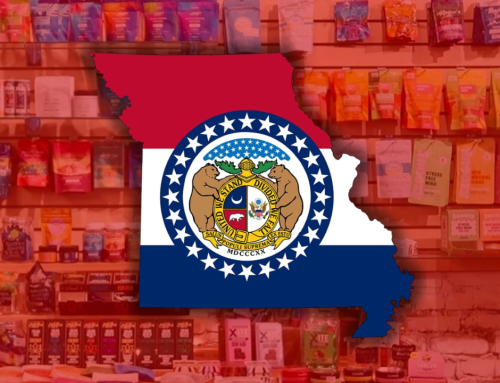
Meanwhile, the hemp-derived THC sector hit a regulatory wall ahead of the December 11 federal definition change. Illinois began enforcing its state hemp restrictions on November 12, prompting roughly 250 businesses to sue for injunctive relief. Similarly, in Missouri, state regulators moved THCA flower, vapes, and solid edibles into licensed Cannabis retail on November 12 under HB 2641, granting naturally derived hemp beverages a temporary grace period through December 11.
2. Federal Registrations Reshape Medical Operators & Psychedelics
Federal agencies delivered long-awaited administrative milestones for medical Cannabis operators and clinical researchers. The DEA issued federal registrations to more than 900 state-licensed medical Cannabis dispensaries across seven states, implementing the DoJ order that placed qualifying medical Cannabis in Schedule III and eliminated Section 280E tax penalties for registered facilities. Dual-purpose dispensaries serving both medical and adult-use markets remain excluded from registration.
In the psychedelics sector, Compass Pathways marked a historic regulatory submission for treatment-resistant depression. Backed by two Phase 3 trials and a Commissioner’s National Priority Voucher that compresses review timelines to one or two months, Compass is targeting COMP360 for H1 2027 commercial launch, though DEA rescheduling remains a separate hurdle.
3. Cross Border Bidding Wars & Institutional Index Milestones
Capital markets activity centered on contested consolidation and institutional validation. The battle for Aurora Cannabis intensified with Curaleaf clearing competition law reviews for its enhanced hostile takeover bid in both Canada and Germany. Aurora’s board unanimously rejected Curaleaf’s revised cash-and-stock proposal in favor of a CA$561 million arrangement with Organigram backed by British American Tobacco (BAT). The news sent Aurora shares soaring to ten-month highs following Organigram’s offer, surging over 20% ahead of December shareholder votes.
Domestically, scale and balance-sheet restructuring drove major transactions. Vireo completed FLUENT acquisition, absorbing 33 dispensaries and expanding its Florida footprint to 74 locations ahead of a pending December shareholder vote on its Planet 13 merger.
On public exchanges, Trulieve gained preliminary entry into the Russell 3000 Index following its NYSE uplisting and Delaware redomicile, positioning the medical Cannabis operator for passive institutional inflows. North of the border, Decibel joined the OTCQX Best Market to improve secondary trading liquidity and price transparency for US dollar investors.
4. Q3 2026 Earnings: Margin Pressure & Cash Discipline
Third-quarter earnings demonstrated that top-line growth requires strict cost discipline to offset persistent wholesale price deflation.
Among Tier I operators, Vireo Growth reported a 177% increase in revenue to $253.7 million due to multiple acquisitions. However, integration expenses and taxes resulted in a net loss of $24 million. Following its Harvest deconsolidation, Trulieve, operating on a medical-only basis, delivered $230.2 million in sales and a sector-leading 64% gross margin. Curaleaf posted an 11% year-over-year increase in net revenue to $352.7 million, driven by international gains, while gross margins compressed to 48.7%. GTI generated $324.4 million in revenue, marking an 11.3% increase and achieving its first positive comparable store sales reading since 2024. Cresco Labs recorded $173 million in revenue and $21 million in free cash flow.
Mid-tier operators navigated mixed regional dynamics. Ascend Wellness‘s retail traffic increased net revenue by 4.2% to $130 million and expanded adjusted gross margins to 48.4%. Pennsylvania wholesale and retail gains pushed TerrAscend‘s revenue up 4.8% to $68.2 million, marking 17 straight quarters of positive operating cash flow. MariMed beat estimates with record revenue of $44.2 million, but wholesale price compression trimmed adjusted EBITDA to $4.7 million. RYTHM generated $23.9 million in revenue, marking 185% annual growth in THC beverage depletions. However, management withheld Q4 guidance due to federal hemp uncertainty. Planet 13, which exited California and cut Nevada cultivation costs, doubled its gross margin to 56.2% on $23.1 million in sales. Grown Rogue generated $11 million in revenue, a 29% increase driven by growth in New Jersey, while recording a $5 million acquisition loss in Illinois.
Canadian producers leaned heavily on international medical exports to offset domestic saturation. Village Farms reported a 75% surge in medical Cannabis exports, reaching $20.8 million on $66.9 million in consolidated sales. Cronos Group recorded a 75% surge in net revenue, reaching $63.5 million, while adjusted EBITDA tripled to $17.1 million. Canopy Growth posted a 22% increase in top-line growth, reaching CA$81.4 million, driven by a 141% surge in European medical Cannabis sales.
5. Global Expansion & Supply Chain Focus
International regulatory shifts and upstream cultivation inputs rounded out the fortnight.
In Asia, Nepal has greenlit regulated Cannabis cultivation after its Supreme Court ordered officials to draft licensing rules for medicinal and industrial production within three months.
In Europe, SNDL secured EU-GMP certification for its Atholville facility in New Brunswick. Now, the company can export medical Cannabis directly without paying third-party processing fees. Meanwhile, cultural branding crossed the Atlantic as Snoop Dogg opened a Cannabis social club in Barcelona under Spain’s members-only association model.
Upstream suppliers targeted genetic consistency and aromatic fidelity for commercial growers.
Barney’s Farm now offers Cannabis clones to U.S. growers, shipping rooted cuttings in LED-lit packaging from California.
Loud Spectrum introduced Flower Derived Terpenes (FDT) extracted within an hour of harvest to preserve unique native strain profiles.
HCNFN Insight
For years, the Cannabis sector operated on a single shared bet: federal reform would lift all boats simultaneously, turning broad multi-state footprints into instant cash machines. Recent events dismantled that thesis, replacing it with a sharp bifurcation of capital, compliance, and consumer demand.
Look at how capital markets and regulators are now rewarding completely different corporate architectures. On one side, companies that surgically restructured around federal medical rules [separating adult-use assets, securing DEA registrations under Schedule III, and redomiciling domestically] are unlocking real structural advantages. Eliminating Section 280E tax liabilities immediately repairs unit economics, while qualifying for major equity benchmarks like the Russell 3000 opens the door to passive institutional inflows that retail-driven OTC stocks can never match. Meanwhile, in psychedelics, Compass Pathways completed NDA submission for COMP360 demonstrates that rigorous clinical endpoints and FDA priority pathways [including ibogaine] offer a cleaner, more predictable commercialization route than state-by-state retail patchworks.
On the other side of the ledger, operators straddling dual-purpose adult-use retail and intoxicating hemp face an unforgiving squeeze. Third-quarter earnings confirm that wholesale price deflation and punitive tax provisions continue to eat away at top-line gains, forcing operators to abandon saturated markets and double down on limited-license strongholds or EU-GMP export pipelines. At the same time, the approaching December 11 federal hemp deadline and state-level crackdowns in Illinois and Missouri threaten to abruptly dismantle the unregulated beverage and THCA channels that absorbed billions in consumer spending.
Heading into 2027, the market is no longer pricing potential. Instead, it is pricing regulatory alignment and cash conversion. Whether displaced hemp consumers migrate back into state-licensed dispensaries or sit out the transition will determine Q1 2027 volume, but the strategic takeaway is already clear: survival and valuation premiums belong to operators with clean balance sheets, compliant medical or international export moats, and the discipline to generate free cash flow without waiting for Washington to finish the job.
About the Author: HCN News Team

Related Posts