DEA Bars Dual-Purpose Dispensaries From Federal Medical Cannabis Registration







WASHINGTON – In April, followed by Trump administration’s rescheduling order, the U.S. Department of Justice announced that the DEA had granted federal registrations to more than 900 state-licensed medical Cannabis dispensaries in Alabama, Florida, Mississippi, South Dakota, Texas, Virginia, and West Virginia. However, the same announcement carried a significant catch.
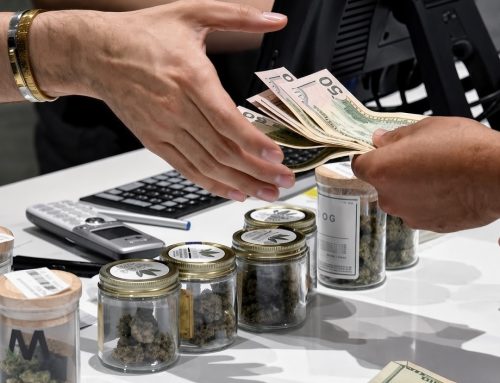
The DEA simultaneously refused to register dispensaries operating under “dual-purpose” licenses when state permits authorizing a single business to serve both medical patients and recreational consumers. That stance effectively locks out operators in most of the 24 states that have legalized both adult-use and medical Cannabis, including California, Colorado, Illinois, Michigan, and Minnesota.
The agency’s position crystallized in a formal Order to Show Cause (OTSC) sent to Minneapolis-based In-Dispensary, a retail operator serving both market segments under Minnesota’s licensing framework. The document, signed by Cheri Oz, assistant administrator of the DEA’s Diversion Control Division, stated that Minnesota’s dual-purpose license “falls outside the recently promulgated definition of ‘state medical license'” and that registering such a business “would be inconsistent with the Controlled Substances Act as well as United States’ treaty obligations.”
The core of the DEA’s argument is diversion. Recreational Cannabis remains a Schedule I substance under federal law. Any business authorized to sell Cannabis for non-medical purposes, even under the same license as medical operations, is engaged in per se diversion, the agency argued. Minnesota’s regulatory framework, the order states, “fails to provide ‘robust’ protections against diversion, as non-medical use of marijuana remains prohibited under federal law.”
The DEA raised two additional objections specific to Minnesota: the state permits military veterans to self-certify medical eligibility using only a veteran ID rather than a written physician’s certification, and state law allows dispensaries to sell hemp-derived cannabinoids, which the agency treats as synthetic Cannabis products.
In-Dispensary has 30 days to request a formal hearing or submit a corrective action plan. Minnesota’s Office of Cannabis Management noted that the DEA’s order does not impact the state law and that medical Cannabis remains available to patients.
The financial stakes are concrete. Federally registered medical Cannabis businesses are now relieved from Section 280E of the Internal Revenue Code – a provision that historically denied standard business deductions to all Cannabis operators regardless of their state’s legal status. Operators blocked from federal registration see none of that.
Adding urgency, the DEA has set a November 29 supply-chain deadline requiring registered businesses to source products exclusively from other federally registered companies – a cutoff that further divides the registered from the unregistered.
The DEA’s position confirms what the April rescheduling order telegraphed from the start. Federal recognition is reserved for operations structured exclusively around medical Cannabis. The Trump administration’s framework was built as a medical intervention, not a broad industry concession, and the agency is enforcing that framing with precision. For operators in dual-license states, the message is direct – 280E relief and federal legitimacy run through the medical-only lane. Until broader rescheduling of adult-use Cannabis clears the DEA’s ongoing administrative hearing, businesses that serve both markets will remain on the outside looking in.
About the Author: HCN News Team

Related Posts