Curaleaf Announces 1-for-3 Reverse Stock Split to Clear Path for U.S. Exchange Listing






STAMFORD – Curaleaf Holdings Inc. has announced a 1-for-3 reverse stock split of its subordinate voting shares, set to take effect on or about June 5, 2026. The move, approved by the company’s Board of Directors and developed in coordination with major U.S. stock exchanges, combines every three existing shares into a new one.
The consolidation will reduce Curaleaf’s outstanding subordinate voting shares from approximately 698.7 million to roughly 232.9 million. The company’s shares will continue trading on the Toronto Stock Exchange under the ticker CURA and on the OTCQX market under CURLF until any uplisting becomes effective.
Curaleaf’s Board approved the reverse stock split to ensure the company meets share price level criteria established by U.S. exchanges, as ongoing regulatory developments may soon provide a direct opportunity to uplist. Beyond exchange eligibility, the consolidation is also structured to push the share price above thresholds enforced by select retail brokerages, a move the company expects will draw wider institutional interest and strengthen overall trading liquidity.
“Rescheduling of medical cannabis has created a potential pathway toward uplisting to a major U.S. exchange, and we’re now more prepared than ever. With a hearing on the full rescheduling of cannabis expected to end in July, and U.S. Treasury guidance supporting the normalization of the industry forthcoming, we believe there will soon be greater clarity around the regulatory and tax framework for our industry.”
“These developments should improve access to capital, broaden the investor base, and further legitimize cannabis in the public markets. We are preparing today to move quickly and decisively when that opportunity comes into view”, noted Boris Jordan, Chairman and CEO of Curaleaf.
An April final order reclassifying medical Cannabis as a Schedule III drug opened a potential pathway, though access to exchanges like the NYSE is not explicitly guaranteed by rescheduling alone and may require further action to satisfy exchanges that have historically been reluctant to list plant-touching cannabis businesses. Curaleaf appears to be getting ahead of that curve rather than waiting for full regulatory resolution.
For investors, the reverse split itself carries no direct change to the proportional ownership or total market value of existing holdings. What changes is the company’s market positioning. A higher per-share price makes Curaleaf eligible for exchange listing requirements while expanding its accessibility to institutional funds that are restricted from holding low-priced securities.
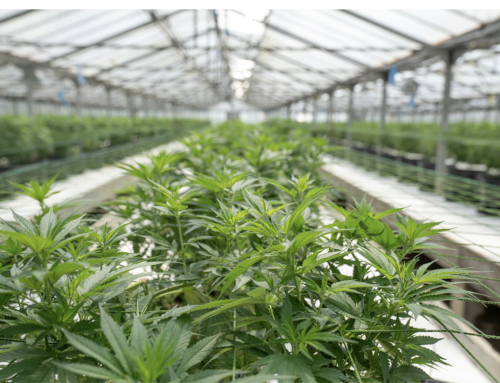
Curaleaf currently operates across approximately 17 states with 151 dispensaries, 19 cultivation sites, and 20 manufacturing facilities. It remains one of the largest Cannabis operators by footprint in the United States, and the broader strategic intent here is clear. The company is not waiting to see how federal policy unfolds. It is building its capital markets infrastructure now, so it can act when the regulatory window opens.
About the Author: HCN News Team

Related Posts