Senate Democrats Reintroduce Comprehensive Cannabis Descheduling Bill, Renewing Push for Federal Reform
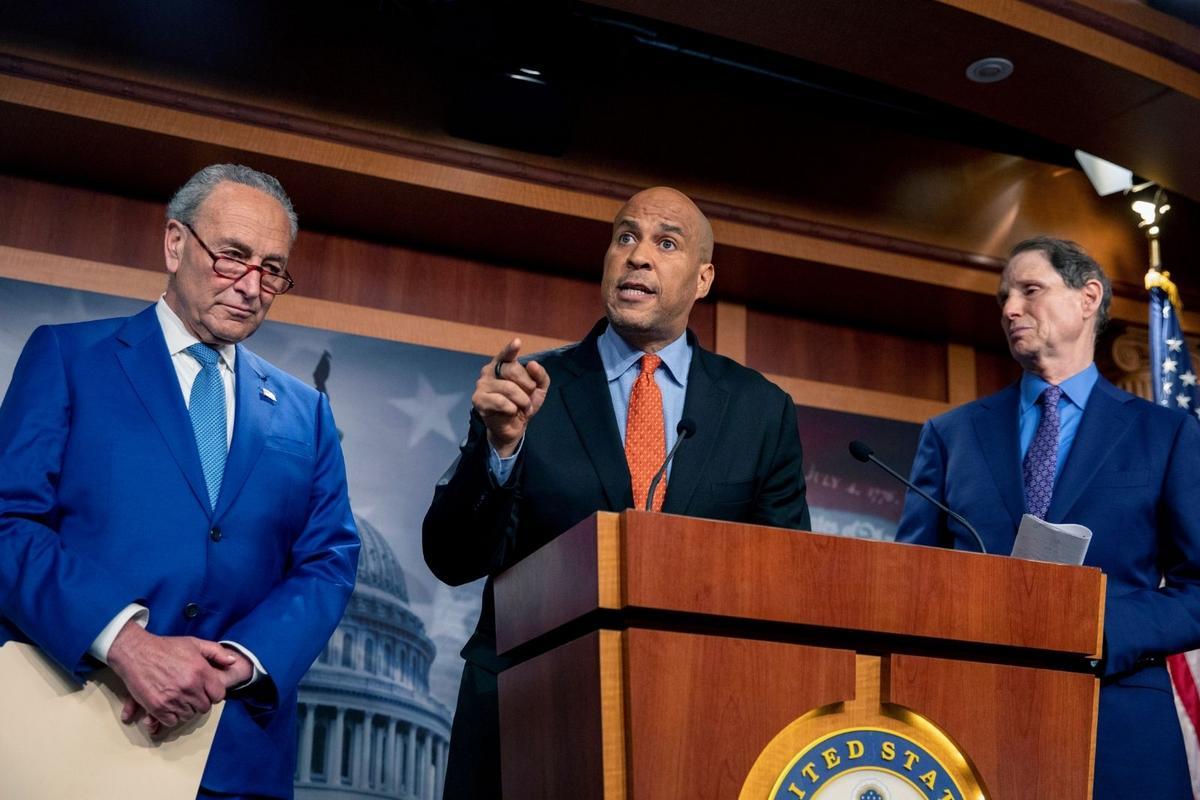






WASHINGTON, D.C. – The push for comprehensive federal Cannabis reform has returned to the U.S. Senate with the reintroduction of the Cannabis Administration and Opportunity Act (CAOA), a sweeping piece of legislation that would remove Cannabis from the federal Controlled Substances Act and establish a national framework for regulating the industry.
Introduced by Cory Booker, Chuck Schumer, and Ron Wyden, alongside 13 additional Democratic co-sponsors, the legislation represents one of the most comprehensive federal Cannabis reform proposals ever introduced in Congress.
If enacted, the CAOA would end federal Cannabis prohibition while allowing individual states to continue determining their own Cannabis policies. It would also establish a regulatory framework governing the cultivation, manufacture, distribution, and sale of Cannabis products across the United States.
A Shift Away from Federal Prohibition
Although most Americans now live in states where Cannabis is legal for either medical or adult use, federal law continues to classify Cannabis as a Schedule I controlled substance. That classification places it alongside drugs deemed to have no accepted medical use and a high potential for abuse—a position that many policymakers, physicians, researchers, and industry participants argue is increasingly inconsistent with scientific evidence and state law.
According to NORML, the disconnect between state legalization and federal prohibition continues to create significant challenges for the industry, including restrictions on banking, scientific research, interstate commerce, taxation, and investment.
Morgan Fox, Political Director at NORML, said the legislation reflects the reality of today’s Cannabis landscape.
“The continued federal prohibition of marijuana is increasingly out of step with public opinion, state laws, and scientific evidence.”
Fox added that Congress now has an opportunity to replace decades of prohibition with a modern regulatory framework focused on public health, personal freedom, and responsible oversight.
More Than Descheduling
Beyond removing Cannabis from the Controlled Substances Act, the CAOA contains a broad package of reforms designed to address both the future and the legacy of prohibition.
Among its major provisions are:
- Removing Cannabis from federal drug scheduling.
- Allowing states to determine their own Cannabis laws without federal interference.
- Creating a federal regulatory framework for legal Cannabis markets.
- Expanding opportunities for Cannabis research.
- Improving access to banking and financial services.
- Providing pathways for expungement and resentencing of certain Cannabis convictions.
- Addressing many of the long-term social and economic impacts associated with Cannabis criminalization.
- Supporting broader economic participation within the legal Cannabis industry.
Supporters argue these measures would provide greater regulatory certainty for businesses while addressing long-standing criminal justice concerns.
Industry Watches Federal Developments Closely
The bill arrives during an especially significant period for federal Cannabis policy.
Earlier this year, Acting Attorney General Todd Blanche ordered the immediate rescheduling of state-licensed medical Cannabis products and FDA-approved cannabinoid medicines to Schedule III. However, that directive is currently facing legal challenges that could ultimately affect its implementation.
Separately, the DEA concluded hearings on July 15 regarding the broader proposal to move Cannabis to Schedule III, with a judicial recommendation still pending.
While the Schedule III process could provide meaningful tax and research relief for parts of the industry, many stakeholders continue to argue that descheduling through congressional legislation would offer a more comprehensive and permanent solution by eliminating the ongoing conflict between state and federal law.
Political Challenges Remain
Despite growing public support for Cannabis reform, the CAOA still faces a difficult legislative path.
Comprehensive Cannabis legalization has historically struggled to gain sufficient bipartisan support in Congress, and previous versions of the legislation have failed to advance. Nevertheless, supporters believe the continued expansion of state-legal Cannabis markets, combined with increasing pressure from businesses, patients, veterans, researchers, and state governments, keeps federal reform firmly on the national agenda.
Whether Congress ultimately advances full descheduling or continues pursuing incremental reforms, the debate over federal Cannabis policy is entering another pivotal phase.
For the Cannabis industry, investors, operators, and consumers alike, the reintroduction of the Cannabis Administration and Opportunity Act serves as another reminder that the conversation has shifted from whether federal reform should happen to what form that reform will ultimately take.
About the Author: HCN News Team

Related Posts