The Operators Getting More From Every Premium Dollar







Some cannabis companies have stopped treating insurance as a fixed cost. Here is what sets them apart.
NEW YORK — Most cannabis companies treat insurance the way they treat rent: a fixed cost, negotiated once a year, mostly beyond their control. A smaller group treats it as something to be managed, and is getting noticeably more for its money.
What sets that group apart is less a product than a habit of mind. These operators measure their total cost of risk—premiums plus the losses their policies don’t cover—and look for the part of that cost they can keep. Increasingly, they keep it by owning a share of their insurance through a captive, an insurer that belongs to them.
Not every company suits that approach. Those that benefit most tend to share four traits.
The traits that matter
They spend enough to justify the fixed costs. The required premium, capital and uninsured exposure depend on the structure and risk profile. 3F recommends an individual assessment rather than assuming one minimum fits every company.
They have a good record. The financial heart of the idea is that a company keeps the value of its own low losses. The better its claims history relative to the industry, the more it gains.
They have real gaps. A company that has paid out of pocket for recalls, regulatory defense, inventory losses, or broken equipment has the most to recover.
They plan for the long term. The value builds over years, so steady operations and a horizon of five years or more make the biggest difference.
Multistate operators
For a multistate operator, the gains compound. A large insurance budget means a large potential surplus. One insurer can coordinate coverage across several states, replacing a patchwork of surplus-lines policies. And operations spread across states and business lines help that insurer spread its risk, which strengthens both its stability and its standing with tax authorities. Captives increasingly write cyber, property, and excess-liability coverage, according to Marsh—lines that matter to companies with valuable data, real estate, and litigation exposure.

Vertically integrated companies
An integrated operator carries cultivation, processing, and retail risk under one roof, and with it more gaps: crop loss, extraction equipment, recalls, inventory at every stage. Owning part of its insurance lets it cover the whole chain at prices based on its own record, not on the market’s worst assumptions about each link.

Established single-state operators
A single-state company with meaningful revenue and a clean compliance record is often an excellent candidate for a protected cell, which insures its risks in a segregated account inside an existing captive, with less capital and faster setup. Protected-cell premium volume at Marsh’s Mangrove facility rose 47 percent, according to coverage of its 2026 benchmarking report. The figure is not cannabis-specific.
Smaller operators
Smaller businesses may consider group captives or protected cells where available. Eligibility and economics vary. These structures differ, and 3F’s particular program and suitability criteria should be confirmed directly.

Medical operators, after April
Tax treatment depends on the activity covered by the federal medical-marijuana order and the operator’s facts. Treasury has described relief for covered activity and expense allocation for mixed businesses. A captive does not itself remove Section 280E, and deductions require a qualifying insurance arrangement.
The first step
These operators began with a policy analysis: current policies set against actual exposures, and an estimate of total cost of risk. 3F offers that analysis as a complimentary service. Where the numbers favored owning part of the insurance, a feasibility study followed, in which an independent actuary designed and priced the captive’s policies. The question they were answering was simple. Would owning the insurer leave the company better off than renting coverage from the market? For a growing number, the answer has been yes.
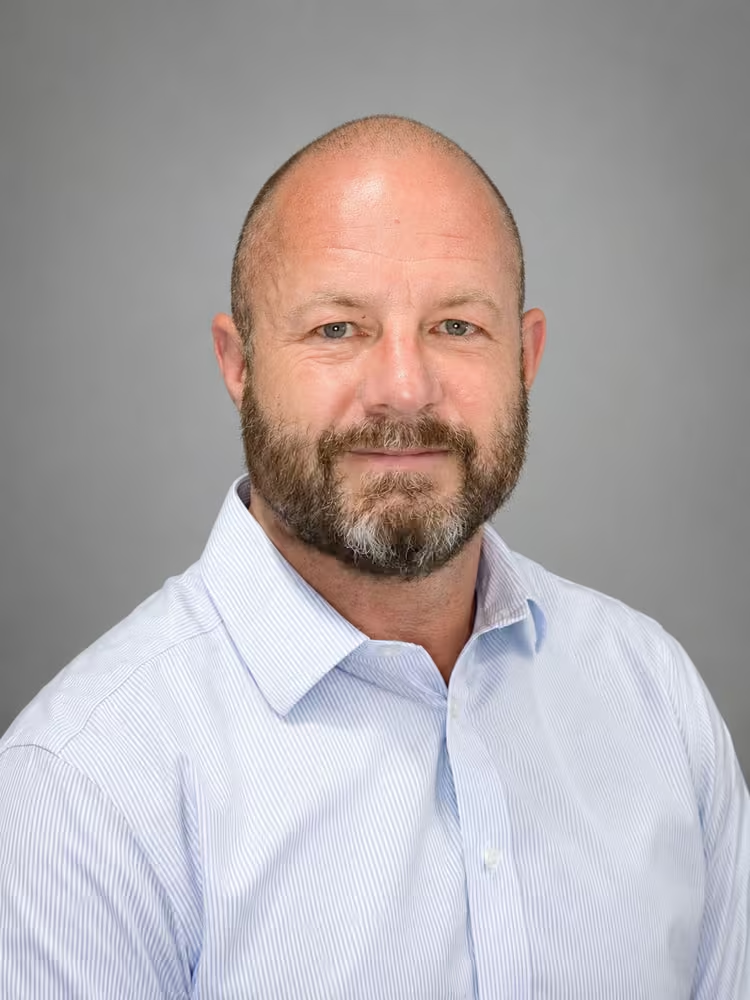
By Patrick Johnston, Co-Founder, 3F Captive Services
Patrick Johnston is co-founder of 3F Captive Services, which helps mid-sized businesses form and manage captive insurance companies. He has spent more than twenty years running and investing in businesses: he operated a dairy, has owned S&P Ranch, LLC, a California specialty-crop grower, since 2008, and has been chief executive of AgCentra Capital Management since 2016. He co-founded 3F in 2022 and works with owners in agriculture, cannabis, transportation and logistics, construction, health care, hospitality, and professional services. He holds a B.A. in economics from the University of Washington and an M.B.A. from Northwestern University’s Kellogg School of Management.
This is sponsored content. It was written by Patrick Johnston of 3F Captive Services and published by HCN in partnership with 3F Captive Services. It is for general information only and is not insurance, tax, or legal advice. Readers should consult their own qualified advisers.
About the Author: HCN News Team

Related Posts