Big Alcohol. Big Tobacco. What About Big Marijuana?






By Mark Collins | HCN Opinion
When Democratic Texas U.S. Senate candidate James Talarico identified Big Alcohol and Big Tobacco as beneficiaries of restrictions on hemp-derived THC, he raised an important question: Who profits when consumers lose access? In an interview with The Breakfast Club, he argued that competing industries had a financial interest in keeping THC products off the shelves.
But that discussion needs another name: Big Marijuana.
I use “marijuana” deliberately here to describe companies that welcome restrictions on competing Cannabis products. To me, that position betrays the spirit of a movement built around access, personal freedom and ending prohibition.
Companies should win customers by offering better products, better service and better prices. Having the government remove competing products is a different business strategy.
That looks more like cronyism than capitalism.

When prohibition becomes a growth opportunity
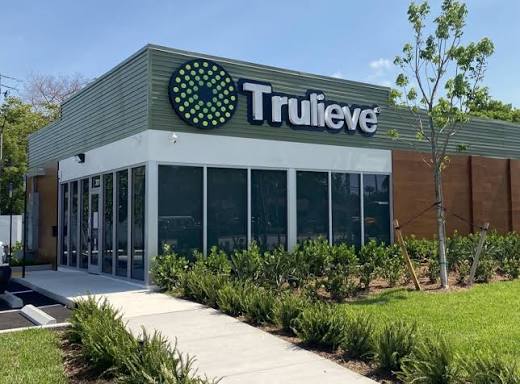
Consider Trulieve.
On its first-quarter 2026 earnings call, CEO Kim Rivers described a potential hemp ban as an opportunity to move consumers into regulated medical Cannabis programs. She identified Florida and Texas as markets where converting even a fraction of hemp customers could produce meaningful business gains.
By its second-quarter call, the company was describing a targeted strategy to acquire customers currently served by the intoxicating hemp market as the federal ban takes effect.
The commercial logic is clear. Restrict one channel selling THC, and another channel selling THC may gain customers.
Recognizing that opportunity does not, by itself, establish that Trulieve caused a ban. But it does expose a conflict that deserves scrutiny: Companies selling Cannabis can benefit financially when competing Cannabis products disappear.
Licensed operators have legitimate concerns about testing, age verification, labeling and unequal regulatory costs. Consumers deserve enforceable protections.
Those concerns support sensible regulation. They do not automatically justify eliminating an entire competing market.

CEO Trulieve: Kim Rivers
Political money deserves public scrutiny
Trulieve’s political spending adds another dimension.
The company contributed $750,000 to Trump’s inaugural committee. Federal campaign-finance reporting also identified a $2.5 million contribution from Trulieve to America First Agriculture Action Inc., a political committee sharing a treasurer with Trump’s MAGA Inc. super PAC.
Rivers has also participated in Oval Office discussions about Cannabis policy, according to Forbes.
In June, Trulieve announced its NYSE listing, saying it expected broader investor access and greater liquidity. Rivers explicitly credited Trump’s medical Cannabis rescheduling action with paving the way.
The donations do not prove a backroom deal. But the public deserves answers about what major donors seek, what they advocate and who benefits from the resulting policies.
Access to policymakers should come with scrutiny, especially when regulatory decisions can redirect customers and reshape competition.
Critics should not need corporate budgets
Political influence is not the only concern.
In my view, Trulieve’s lawsuit against Nate Jurewicz invites comparison with Trump’s playbook of taking critics to court.
Trulieve is pursuing a $750,000 defamation lawsuit over social media posts associated with Ganja Leaks, the Cannabis news outlet Jurewicz founded. The company alleges that the posts contained defamatory claims and denies the underlying accusations. Jurewicz disputes the case and characterizes it as an effort to silence his reporting.
That distinction matters. Allegations are not established facts, and companies have a right to challenge defamatory statements.
But the financial imbalance matters too. An independent publisher defending himself faces a very different burden from a large corporation retaining outside counsel. Jurewicz has described fighting the case without a lawyer.
Whatever the eventual outcome, the cost of defending a lawsuit can discourage scrutiny long before a court decides who is right.
Consumers deserve a choice
The Cannabis industry spent decades arguing that prohibition denied adults access, restricted personal freedom and pushed commerce into illicit markets.
Those principles should still apply when the products being prohibited belong to a competitor.
An industry cannot credibly champion consumer freedom while welcoming restrictions that funnel consumers toward its own stores.
When companies selling THC benefit from bans on someone else’s THC, the question deserves a straight answer:
Are they protecting public health—or protecting their market share?
About the Author: HCN News Team

Related Posts