Analysis: The DEA Is Now Fighting to Move Cannabis to Schedule III
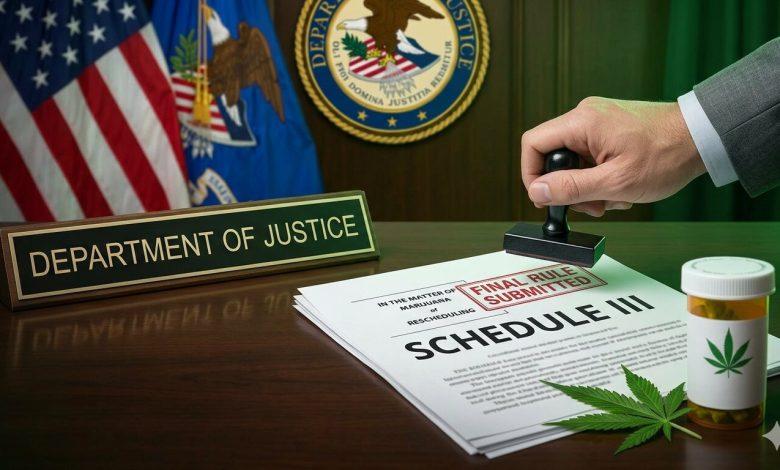






WASHINGTON, D.C.,- For more than 50 years, the Drug Enforcement Administration has helped enforce federal Cannabis prohibition.
This week, the DEA formally argued that Cannabis no longer belongs in Schedule I.
In its final written argument following 11 days of hearings, the agency defended moving Cannabis from Schedule I to Schedule III and rejected the central legal challenge presented by seven opponents.
Those opponents included Smart Approaches to Marijuana, the Tennessee Bureau of Investigation, the National Drug & Alcohol Screening Association, DUID Victim Voices, two medical professionals and four deeply conservative, Republican-led red states: Nebraska, Idaho, Indiana and Louisiana.
Every outside party selected for the hearing opposed rescheduling. No Cannabis company, patient organization, medical Cannabis advocate or reform group was permitted to participate.
That left the DEA—an agency historically synonymous with Cannabis prohibition—as the only party inside the hearing formally defending Schedule III.
How Cannabis ended up in Schedule I
Cannabis has been classified as a Schedule I controlled substance since Congress passed the Controlled Substances Act in 1970.
Schedule I is reserved for substances considered to have a high potential for abuse, no currently accepted medical use and no accepted safety under medical supervision.
Cannabis was placed alongside heroin and LSD. Cocaine, fentanyl, methamphetamine and oxycodone were classified as Schedule II because the government recognized their medical applications despite their substantial risks.
The original Cannabis classification was supposed to be reconsidered after a federal commission studied the issue. In 1972, the National Commission on Marihuana and Drug Abuse recommended that possession for personal use no longer be criminalized.
President Richard Nixon rejected the recommendation.
Numerous rescheduling petitions followed, but the federal government repeatedly refused to change Cannabis’s status. As recently as 2016, the DEA concluded that Cannabis had no currently accepted medical use and should remain in Schedule I.
The country moved in the opposite direction.
California legalized medical Cannabis in 1996. Medical programs subsequently spread across most of the country, followed by regulated adult-use markets. Millions of Americans began using Cannabis legally under state law and with recommendations from healthcare professionals.
Federal policy continued to insist that none of this represented accepted medical use.
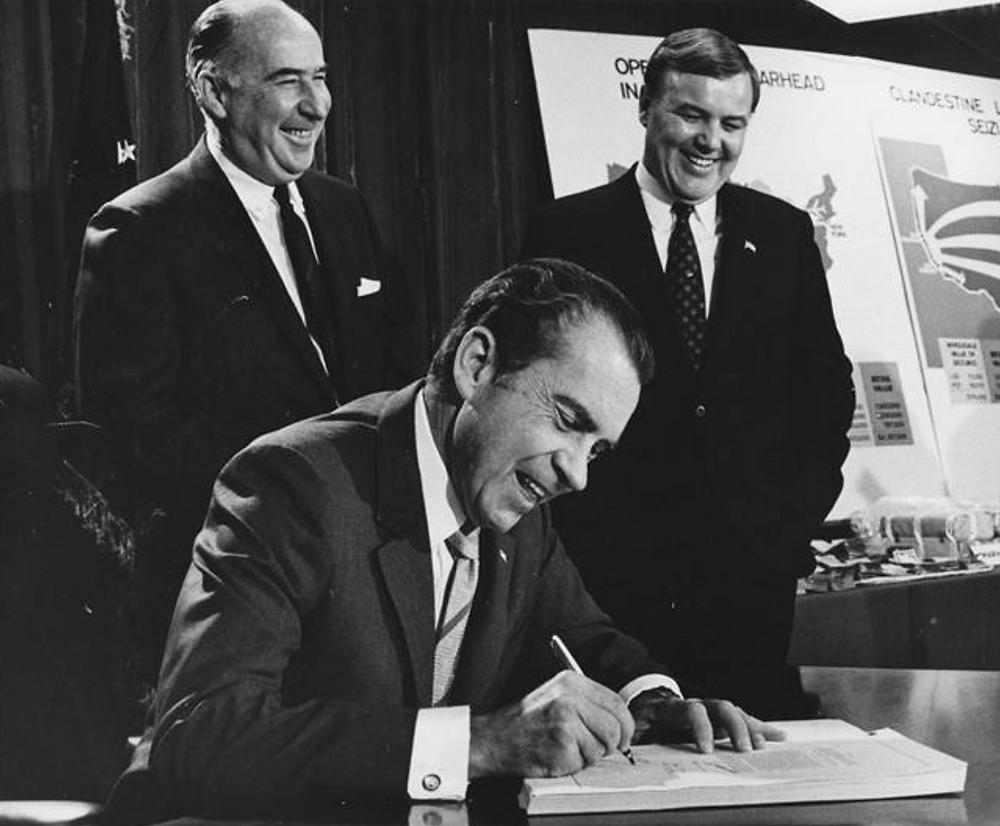
Disgraced former President Richard Nixon signs the deeply flawed CSA 1972.
How the current review began
In October 2022, President Joe Biden directed the Department of Health and Human Services and the attorney general to review the federal classification of Cannabis.
After examining the medical and scientific evidence, HHS recommended in August 2023 that Cannabis be transferred to Schedule III.
HHS concluded that Cannabis has a currently accepted medical use, has a lower potential for abuse than Schedule I and II substances and produces a dependence profile consistent with Schedule III.
It identified credible medical applications including pain, nausea and vomiting, and anorexia associated with certain medical conditions.
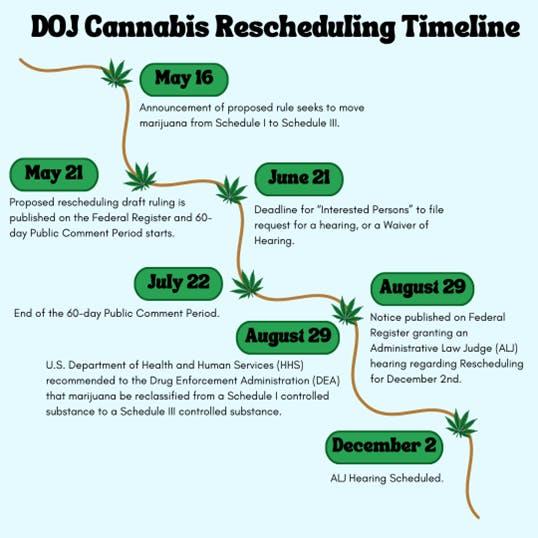
The Department of Justice published a proposed Schedule III rule in May 2024. Nearly 43,000 public comments followed.
The original hearing process stalled in early 2025 because of procedural disputes and an appeal. President Donald Trump revived the effort in December 2025 by directing the federal government to expedite medical Cannabis rescheduling and research.
In April 2026, the Justice Department placed FDA-approved Cannabis products and products regulated under qualifying state medical Cannabis licenses into Schedule III.
It also launched a new hearing to determine whether Cannabis more broadly should move from Schedule I to Schedule III.

Who fought the change?
The formal hearing ran from June 29 through July 15, 2026.
Seven outside participants were selected:
- National Drug & Alcohol Screening Association
- Tennessee Bureau of Investigation
- Smart Approaches to Marijuana
- Nebraska, Idaho, Indiana and Louisiana, acting together
- DUID Victim Voices
- Dr. Kenneth Finn
- Pharmacist Phillip Drum
Every one of them opposed rescheduling.
Nebraska, Idaho, Indiana and Louisiana are deeply conservative red states with Republican-led governments and long records of resistance to broader Cannabis reform. Their participation gave the opposition additional political and law-enforcement weight.
Supporters were excluded because the DEA determined they had not shown that they would be “adversely affected or aggrieved” by a rule they supported.
That decision prevented Cannabis businesses, patients and reform organizations from presenting their own witnesses and evidence.
The result was extraordinary: seven opposing parties presented the case for keeping Cannabis in Schedule I, while the DEA presented the government’s case for moving it to Schedule III.
What the opposition argued
The opposition’s central argument was that Cannabis still does not meet the legal definition of having a “currently accepted medical use.”
For years, the DEA relied on a demanding five-part test requiring standardized chemistry, reproducible results, adequate safety studies, controlled clinical evidence and acceptance by qualified experts.
That standard is extremely difficult for botanical Cannabis to satisfy. Cannabis is a plant containing numerous compounds, and its chemistry varies among cultivars, products and production methods.
HHS adopted a new two-part analysis in 2023. It asked whether Cannabis is widely used medically under established state programs and whether credible scientific evidence supports at least one medical application.
Opponents argued that HHS abandoned the established test, created a weaker standard specifically for Cannabis and placed too much weight on state medical programs that do not operate like the FDA drug-approval system.
They also raised concerns about modern high-potency products, inconsistent product composition, impaired driving, workplace safety, psychiatric effects, Cannabis-use disorder, youth exposure, diversion and illegal cultivation.
Some of the testimony was significant. Psychiatrist and researcher Dr. Deepak Cyril D’Souza challenged the strength of the evidence supporting Cannabis for pain and emphasized its potential psychiatric risks.
These arguments may not have proven that Cannabis belongs in Schedule I. However, they helped create a record opponents could use to challenge a final Schedule III decision in federal court.
The DEA’s response
In its final filing, the DEA defended the HHS analysis and argued that the opposition’s central legal challenge had “no merit.”
Its lawyers said the traditional five-part test was legally inadequate because it failed to account properly for the widespread medical use of Cannabis through regulated state programs.
That represents a profound change in the federal government’s position.
The DEA is now acknowledging that decades of state-regulated medical use cannot simply be ignored when determining whether Cannabis has an accepted medical application.
The agency also relied on HHS findings that Cannabis has a lower potential for abuse than Schedule I and II substances. According to HHS, its physical-dependence and withdrawal profile is more consistent with Schedule III.
The law does not require the DEA to find Cannabis harmless before rescheduling it.
The legal question is whether Cannabis has accepted medical value and whether its abuse potential and dependence risks justify keeping it alongside heroin—and in a more restrictive category than fentanyl, cocaine and oxycodone.
The opponents presented evidence that Cannabis can cause harm. But evidence of harm does not automatically establish that it meets the legal requirements for Schedule I or II.
There was also an uncomfortable moment for the opposition. Humboldt County Sheriff William Honsal, called by the opposing states, reportedly acknowledged during cross-examination that regulated Cannabis can reduce crime associated with illegal production and diversion.
What Schedule III would change
Moving Cannabis to Schedule III would be historic, but it would not constitute federal legalization.
Cannabis would remain federally controlled. Schedule III would not automatically legalize adult-use businesses, permit interstate Cannabis commerce, resolve banking restrictions, expunge convictions or eliminate every conflict between state and federal law.
The most immediate business impact would involve Internal Revenue Code Section 280E.
Section 280E prevents businesses trafficking in Schedule I or II substances from deducting normal operating expenses such as payroll, rent, marketing and administration.
Because Section 280E does not apply to Schedule III substances, broader rescheduling could remove this punishing tax burden from qualifying Cannabis businesses.
The situation is more complicated than many headlines suggest. The April 2026 order already created a Schedule III category for FDA-approved Cannabis products and products operating under qualifying state medical licenses. Adult-use Cannabis and products outside that category generally remain in Schedule I while the broader proceeding continues.
That April order is also being challenged in federal court. Opponents argue that the Justice Department improperly used international treaty authority, bypassed normal procedures and created a regulatory structure Congress never authorized.
Schedule III could also reduce research barriers, encourage clinical development and provide the first broad federal recognition that Cannabis has legitimate medical value.

What happens next?
Chief Administrative Law Judge Derek Julius will review the testimony, evidence and final written arguments before issuing his recommendation.
That recommendation will not be final.
DEA Administrator Terrance Cole will make the final agency decision. The participating parties can file objections, and any final Schedule III rule will almost certainly face further litigation.
The DEA must therefore produce a decision that explains why it accepted the HHS framework, how it considered the opposing evidence and why Schedule III is consistent with federal law.
This is not the end of Cannabis prohibition. It is not descheduling, and it is not federal legalization.
But its historical significance should not be understated.
For decades, the prohibition movement’s central argument was that Cannabis had no accepted medical use. That argument kept Cannabis in Schedule I even as medical programs spread across the country.
Now the DEA itself is arguing that the claim can no longer be supported.
There is an old saying: if you sit by the river long enough, you will see the bodies of your opponents float by.
After more than 50 years, we may finally be witnessing the death of the prohibition movement’s central argument—and the DEA is delivering the eulogy.
About the Author: HCN News Team

Related Posts