Fewer Americans Drink Alcohol as Cannabis Shows Up to the Party
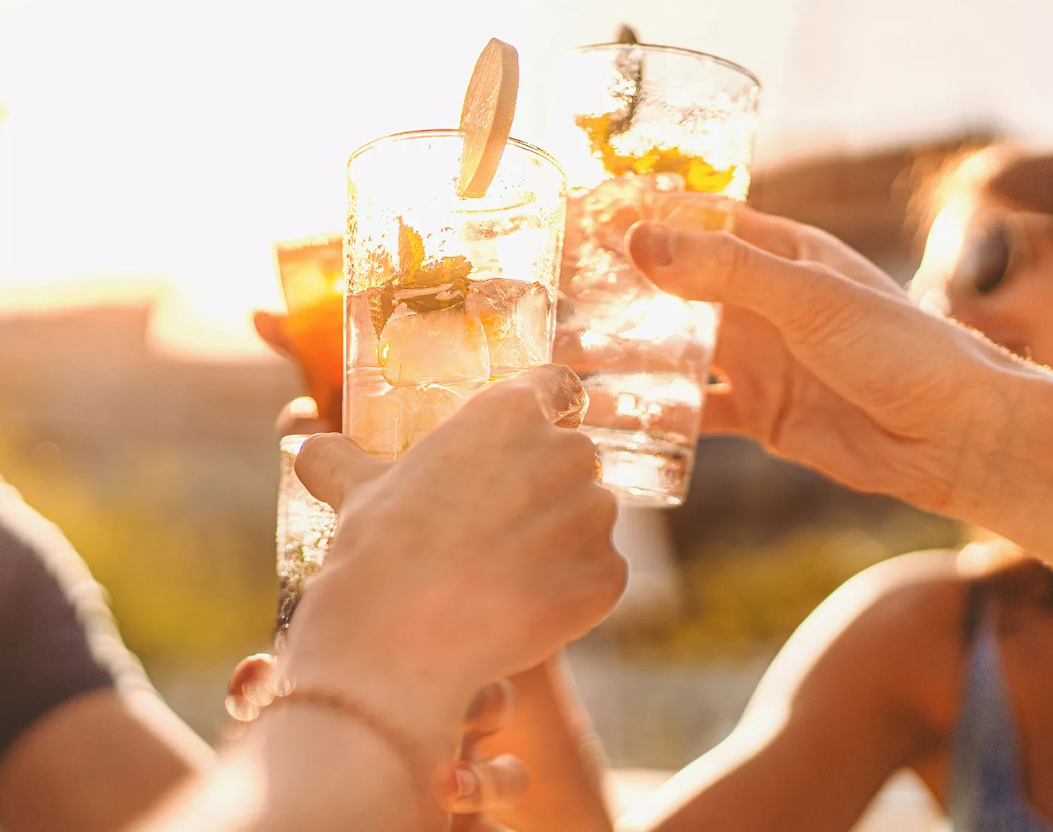






LOS ANGELES – For generations, alcohol held an unquestioned place at the center of adult social life. A drink after work. Beer at the game. Wine with dinner. That relationship is now under measurable pressure: from shifting health views, economic friction, and a plant-derived alternative that until recently carried too much stigma to register at scale.
The Numbers Hard to Argue With
Gallup’s consumption habits survey, first published in August 2025 and confirmed at the same level a year later, found that just 54% of U.S. adults say they drink alcohol – the lowest figure in the organization’s 90-year tracking of the question. The share had held above 60% for most of the prior three decades, fell to 58% in 2024, and dropped further still. For the first time since Gallup began asking in 2001, a majority of Americans (53%) now say moderate drinking, defined as one or two drinks daily, is bad for their health. That attitude shift did not happen overnight, but it accelerated sharply after January 2025, when the U.S. Surgeon General issued a formal advisory linking regular alcohol consumption to at least seven types of cancer, a statement that public health researchers quickly compared to the landmark 1964 report on tobacco.
The Global Trend in Scope
Research firm IWSR, which publishes annual forecasts across 160 national markets, projects worldwide beverage alcohol volume to continue declining through 2031 before stabilizing, landing roughly 1% below 2025 levels by 2035, even as the planet’s legal-drinking-age population is expected to grow by 9%. Consumption in the United States, China, Germany, Japan, and the United Kingdom is forecast to fall by double digits over the next decade. Wine faces the steepest pressure, with global volume projected to drop 14% by 2035. Beer and spirits face smaller but still meaningful losses. Ready-to-drink products are the one standout exception, with 17% global volume growth forecast over the same period.
What’s The Drive for Decline?
Gallup’s own analysis offers an important qualifier. Its data does not attribute the drop in drinking to substitution with Cannabis, pointing instead to health concern and economic pressure – the $25 cocktail being a harder sell in a period of stretched household budgets.
And yet Cannabis is gaining real ground in social spaces through a different mechanism. The picture is less a beer-for-edible swap than a parallel shift in how adults think about spending a Friday evening. The 2025 National Survey on Drug Use and Health, published by the Substance Abuse and Mental Health Services Administration (SAMHSA), found that daily or near-daily Cannabis use now outpaces both daily drinking and daily cigarette smoking in the United States, roughly 21.4 million Americans consumed Cannabis 20 or more times per month, compared to 17.2 million who drank at the same frequency. That crossover is new. It reflects legalization, certainly, but also a generation of adults who have come of age with Cannabis as a routine option.
Among younger workers, a Drug Rehab USA survey of 1,000 employed adults found one in three millennials and Gen Z respondents choosing Cannabis beverages over alcohol at after-work events. Among Gen Z workers specifically, THC use after hours now edges out alcohol, 59% versus 50%.
Preferred Cannabis Product Format
Nanoemulsion technology now allows Cannabis beverages to take effect in as little as five to fifteen minutes, making them workable in social settings where timing actually matters. THC seltzers and low-dose Cannabis tonics now occupy the space that light beer once held. They’re drinkable, sessionable, and socially unobtrusive. U.S. Cannabis beverage sales are projected to reach $2.8 billion by 2028, growing at nearly 17% annually against alcohol’s projected 2.4%. A 2026 study in the Journal of Psychoactive Drugs found that Cannabis beverage consumers were more likely than other Cannabis users to report intentionally substituting it for alcohol. Physical spaces are adapting too. California legalized Cannabis cafes in 2025, joining Colorado, which already had licensed consumption lounges.
The regulatory picture carries real uncertainty. Proposed federal thresholds would cap THC per container at 0.4 milligrams, a level that would render most current Cannabis beverages non-compliant by late 2026. How Congress resolves that tension will determine the actual size of the opportunity.
And alcohol is far from finished. Emerging markets like India, Mexico, Vietnam, and Colombia are each forecast to see significant growth in servings consumed over the same period the U.S. and Europe decline. This is a story of fragmentation, not a funeral.
HCN Insight
The clearest takeaway is that the post-pandemic adult consumer has broken out of a single-product relationship with social relaxation. The forces reducing alcohol use (health concern, cost, and shifting norms) are largely separate from the forces expanding Cannabis adoption. However, they are converging in the same rooms and on the same Friday nights. What is taking shape is less a direct transfer of market share than a genuine expansion of what adults consider acceptable at a gathering. Cannabis beverages, in particular, are worth close attention. They carry the format advantage, the demographic tailwind, and [regulatory headwinds aside] the capital flows that suggest this category is building something that lasts.
The ritual of the social drink is not disappearing.
It is being renegotiated.
About the Author: HCN News Team

Related Posts