What Cannabis Can Learn From Harvard’s Hospitals







Fifty years ago, Harvard’s hospitals faced an insurance market that had turned against them. Their answer offers a road map for cannabis operators caught in the same squeeze.
NEW YORK — In early 1976, the hospitals affiliated with Harvard Medical School were in a position many cannabis executives would recognize. Carriers were leaving their market. The coverage that remained cost more every year. And nothing the hospitals did seemed to affect the price.
So they stopped buying. That March, they opened their own insurance company, the Controlled Risk Insurance Company, known as CRICO, in the Cayman Islands. It is generally regarded as one of the first medical-malpractice captives—an insurer owned by the organizations it covers. Fifty years later, it covers thirty-two hospitals, more than 325 other health-care organizations, and about eighteen thousand physicians.
A familiar squeeze
The parallel to cannabis is hard to miss. Because most cannabis remains a Schedule I substance, most large carriers stay away, leaving a few surplus-lines insurers with little competition. Operators can pay higher rates than comparable businesses for policies that often exclude recalls, crop losses, and regulatory defense. The April, 2026, rescheduling of state-licensed medical cannabis may eventually draw more carriers in, but insurance capital follows legal certainty slowly.
Harvard’s hospitals did not wait for the market to recover. Increasingly, neither do cannabis operators.
The payoff from owning the risk
What happened at CRICO next is the part cannabis executives should study. Because CRICO’s money was the hospitals’ own money, every claim it paid came out of their pockets. That gave its managers a reason most carriers lack: to prevent claims, not merely to price them.
In the mid-nineteen-eighties, CRICO’s loss-prevention staff studied the closed malpractice cases against Harvard’s anesthesiologists and found a common thread: patients who had not been adequately monitored. The anesthesia chiefs wrote the specialty’s first formal monitoring standards, published in 1986. Claims fell. By 1989, CRICO had cut anesthesiologists’ premiums by a third from the year before, and the Anesthesia Patient Safety Foundation reported no major intraoperative anesthesia catastrophe among CRICO’s insureds in some 280,000 anesthetics since 1985. CRICO later offered premium discounts to doctors who trained on simulators.
The cannabis translation
Substitute testing protocols for monitoring standards and the lesson carries over. An operator that insures its own recalls, contamination, and regulatory risk keeps the savings when those losses don’t happen. Supplier audits, redundant lab testing, tighter batch records, and better security stop being overhead and start earning a return. Under commercial coverage, a cannabis company’s discipline mostly benefits its carrier. By forming a captive, that discipline benefits the company.
The structure is now within reach of more than the largest operators. Group captives let similar companies share one insurer; protected cells let a midsize operator rent a walled-off account inside an existing captive. Cannabis-specific programs have appeared since 2024, in property casualty and in employee benefits.
Money that stays home
For a CFO, the economics are straightforward. In a year when claims run below premiums, the surplus belongs to the company, not a carrier, and so does the investment income on reserves. For medical operators, freed from Section 280E in April, premiums paid to a properly built captive are deductible, and a small captive electing under Section 831(b) can pay tax only on its realized investment income, not on the premiums when they go into the captive. Adult-use operators cannot yet deduct premiums, but they keep more of what a carrier would keep. For founders, those reserves sit on the balance sheet, where investors and acquirers can see them.
The first step
Harvard’s hospitals began by looking hard at their claims and asking who was keeping the difference. A cannabis operator can do the same: total three years of premiums and uninsured losses, then compare them with what its carriers actually paid. For multistate and vertically integrated companies, and for established single-state operators with clean records, the answer is often the one Harvard reached half a century ago.
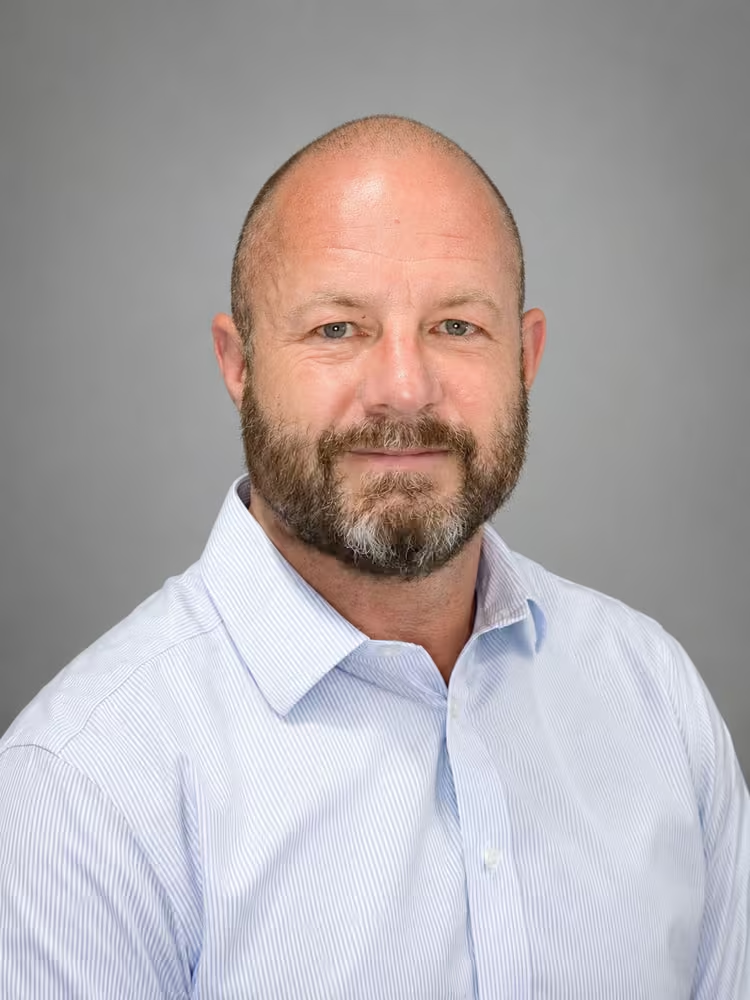
By Patrick Johnston, Co-Founder, 3F Captive Services
Patrick Johnston is co-founder of 3F Captive Services, which helps mid-sized businesses form and manage captive insurance companies. He has spent more than twenty years running and investing in businesses: he operated a dairy, has owned S&P Ranch, LLC, a California specialty-crop grower, since 2008, and has been chief executive of AgCentra Capital Management since 2016. He co-founded 3F in 2022 and works with owners in agriculture, cannabis, transportation and logistics, construction, health care, hospitality, and professional services. He holds a B.A. in economics from the University of Washington and an M.B.A. from Northwestern University’s Kellogg School of Management.
This is sponsored content. It was written by Patrick Johnston of 3F Captive Services and published by HCN in partnership with 3F Captive Services. It is for general information only and is not insurance, tax, or legal advice. Readers should consult their own qualified advisers.
About the Author: HCN News Team

Related Posts