U.S. Legal Cannabis Sales Hit $2.3B in December, Lifting 2025 Total to $27B
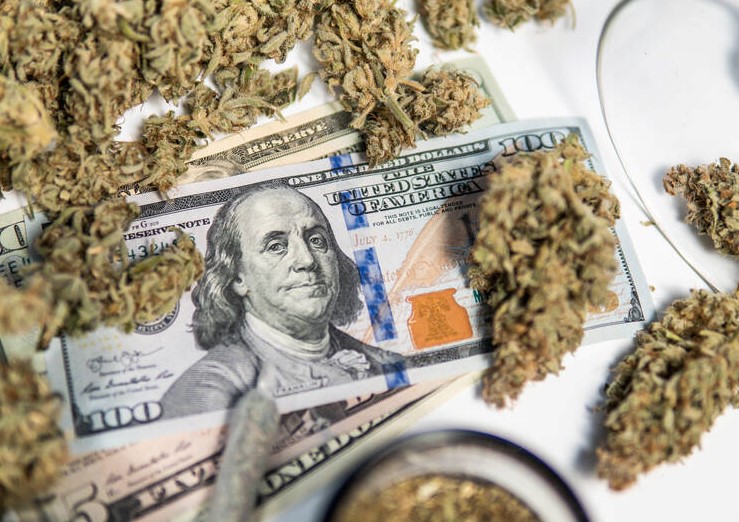






LOS ANGELES – Legal Cannabis sales across the United States reached $2.3 billion in December, pushing the full-year figure for 2025 to $27 billion. The month’s tally edged out November’s $2.2 billion and aligned closely with October’s $2.3 billion, pointing to steady demand in a sector now spanning dozens of markets.
This performance draws from 22 states with recreational programs and four major medical-only operations [Arkansas, Florida, Oklahoma, and Utah] though it omits Minnesota, where figures remain unreleased, and Virginia, which has yet to launch licensed retail. California dominated December with $348 million in sales, a volume that underscores its position as the country’s largest Cannabis economy, followed by Michigan at $262 million and New York at $160 million. Other strong showings came from Illinois [$135.5 million], Massachusetts [$142 million], and Florida [$142.7 million], the last a medical market that continues to punch above its regulatory weight.
Breaking down the numbers reveals a market hitting its stride after years of accelerated scale-up. The $27 billion annual total marks a roughly 10% rise from 2024’s comparable figure in the same states, outpacing broader retail inflation by several points and reflecting consumer habits baked in by now.
Yet, broader estimates from BDSA peg the national haul closer to $31.6 billion, factoring in adult-use at $23.9 billion and medical at $7.7 billion – a discrepancy that highlights how data gaps in nascent programs can skew early tallies.
Those projections, however, may understate the sector’s true ceiling. A new analysis from Viridian Capital Advisors sizes the full addressable recreational market at $81 billion to $94 billion [!], drawing on 2025 sales in nine established states and normalizing for out-of-state buyers, tourism spikes, and lingering black-market draws. Based on the average annual spending per legal adult, the range is estimated to be between $300 and $350 [more than double the $130 assumed in some prior models] after accounting for hemp-derived options and illicit holdouts that siphon demand. Scaling that baseline nationwide suggests operators could tap an extra $50 billion or more by tightening distribution in underserved areas, though it demands sharper focus on compliance and consumer pull to convert skeptics.
What stands out in the December data is the flatlining of month-to-month volatility, a shift from the boom-bust cycles of the early 2020s. Veteran markets like Colorado and Washington, legalized back in 2012, posted $97.6 million and $98.5 million respectively – solid but unflashy, suggesting saturation in mature regions where operators now compete on margins rather than volume. Newer entrants, such as Ohio with $100.1 million in its second full year, show sharper uptake, fueled by dispensary buildouts and targeted marketing.
The 2025 close reinforces a core truth: the U.S. Cannabis trade has matured into a reliable revenue stream, less a gold rush than a steady enterprise. Careful projections for 2026 hover around $40 billion, assuming incremental wins in holdout states like Pennsylvania and Florida’s ballot push bears fruit.
As 2026 unfolds, here at Highly Capitalized Network-HCN we anticipate a wave of consolidations. Oversupply forces weaker players out, and M&A deals accelerate to solidify footprints in saturated states. At the same time, AI-fueled personalization in marketing [from mood-matched recommendations to seamless digital reordering] will drive loyalty, as 90% of consumers favor brands that tailor experiences and discounts sustain foot traffic amid thin margins.
Savvy firms will prioritize cost discipline and cash flow, diversifying into premium, handcrafted options, wellness formats like low-dose beverages, and terpene-rich products that align with shifting demographics, where Millennial and Gen Z buyers now lead spending. In this rationalizing phase, those blending operational efficiency with targeted retention stand to capture the most from a market eyeing $50 billion by year-end.
About the Author: HCN News Team

Related Posts