U.S. Hempcrete Market Set for Steady Rise to $10.6B by 2033
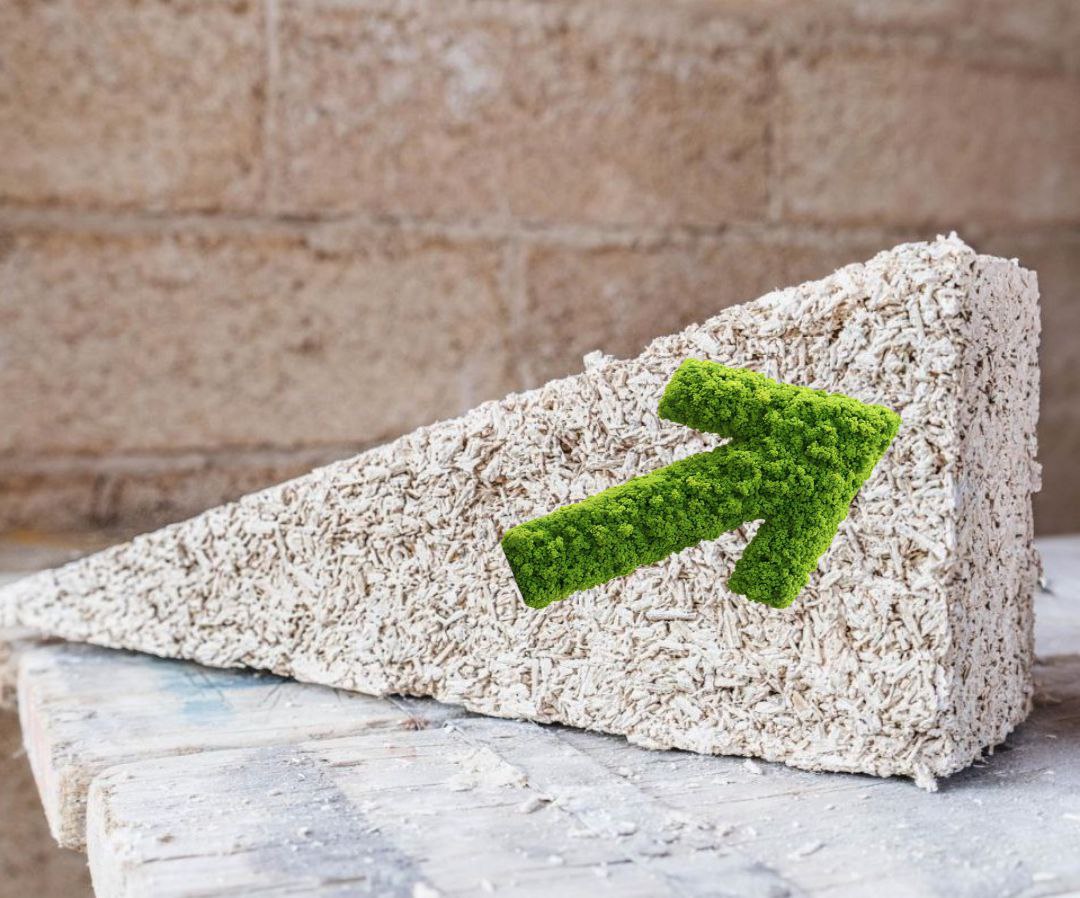






LOS ANGELES – The market for hempcrete, a lightweight composite material derived from the woody core of the hemp plant, stands at $7.83 billion this year and could reach $10.6 billion by 2033. That trajectory points to a compound annual growth rate (CAGR) of 3.86%, reflecting measured progress in a sector tied closely to the broader industrial hemp economy.
Hempcrete, which mixes hemp hurds with lime and water to form insulating blocks or casts, has gained ground as builders seek alternatives to traditional concrete and foam. Its appeal lies in properties like superior thermal regulation and carbon sequestration; each cubic meter of the material can absorb up to 300 pounds of CO2 over its lifecycle. The latest report from Research and Markets, released this week, attributes the expansion to rising demand for low-emission construction in residential settings, where the material now accounts for the bulk of applications.
Data from the analysis breaks down the sector by use: walls dominate at roughly 55% of volume, followed by floors at 25% and roofs at 20%. Residential projects lead end-user demand, comprising 62% of the total, while non-residential builds like commercial retrofits make up the rest. Geographically, California edges out Texas as the top state by share, with New York and Florida rounding out the leaders – states where hemp farming has scaled up since federal legalization.
This growth builds on the 2018 Farm Bill, which classified industrial hemp [Cannabis plants with less than 0.3 percent THC] as an agricultural commodity. That shift unlocked domestic supply chains, cutting reliance on imports from Europe and Canada. Production costs have dipped accordingly; a ton of hemp hurds now fetches about $200, down from $350 pre-2019. Yet the pace remains deliberate. At 3.86% annually, the sector trails the 17% clip projected for overall U.S. industrial hemp through 2030, per Mordor Intelligence. Hempcrete’s narrower focus on construction, versus fibers for textiles or seeds for food, explains some of the gap.
Consider the numbers. Starting from $7.83 billion, the market would add about $340 million per year on average to hit $10.6 billion. That’s equivalent to outfitting 50,000 new single-family homes annually with hempcrete walls, assuming current pricing holds. However, adoption ultimately requires execution. A May 2024 pilot in Quincy, MA, funded by a $750,000 federal grant, swapped out fossil-fuel systems in low-income housing for hempcrete-enhanced heat pumps, slashing energy bills by 30%. Such cases demonstrate real-world returns, yet they remain outliers.
On the supply side, innovations are helping. In September 2024, Renewable Natural Resources debuted a hemp-based binder that cuts curing time by half, addressing one pain point for contractors. Companies like IsoHemp, with U.S. operations in Colorado, report 15% year-over-year order growth, driven by passive-house certifications that favor breathable materials. Still, the report flags hurdles. Initial outlays for hempcrete run 20-30% higher than standard insulation, and specialized training adds to timelines.
Regulatory friction looms largest. Hempcrete lacks uniform approval in building codes across most states, forcing project-by-project variances that deter big developers. The U.S. Hemp Building Association pushes for ASTM standards, but progress crawls – only Kentucky and Oregon have statewide nods as of late 2025. A Lucintel analysis pegs this as the top barrier, estimating it caps market penetration at under 5% of new U.S. insulation installs. Supply inconsistencies compound the issue; weather-dependent hemp yields fluctuated 12% last harvest, per USDA data, tightening raw material availability.
Zoom out, and hempcrete fits into a $9.5 billion North American sustainable materials push, as outlined in a separate Research and Markets report. But skeptics question the forecast’s conservatism. Global hempcrete projections from Cognitive Market Research top $42 billion by 2033 at a 5% clip, suggesting U.S. figures might understate export potential or overlooked commercial uses. If federal incentives from the Inflation Reduction Act extend to hemp composites, that could juice returns; a 10% tax credit on qualifying builds might lift CAGR to 5.5%, adding $2 billion in value.
For now, the sector’s path looks reliable rather than revolutionary. Builders in sunbelt states experiment with hempcrete roofs for hurricane resilience, while Midwest companies eye it for mold-prone basements. As domestic hemp acreage climbs toward 100,000 acres by 2027 [up from 45,000 in 2024], the raw inputs should stabilize.
About the Author: HCN News Team

Related Posts