Rubicon Organics Reports Q1 2026 Financial Results






VANCOUVER – Rubicon Organics Inc. delivered its first-quarter report, revealing results that show both progress and short-term pressures common in an industry shifting toward larger-scale operations – all while balancing strong market share gains with the short-term financial drag of expansion.
The company, specializing in organic premium Cannabis products, posted net revenue of $13.7 million for the first quarter ended March 31, 2026, an 11% increase over the same period last year. Growth came from stronger sales of flower and pre-rolls, even as a lingering strike at the British Columbia provincial distributor weighed on some shipments.
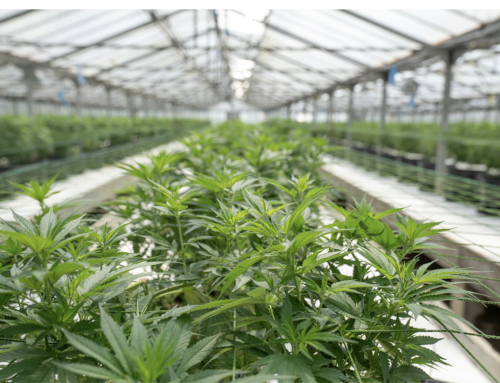
Gross profit totaled $3.5 million, down from $4.2 million in the prior-year quarter. The company pointed to added operating costs from its new GACP-certified Cascadia greenhouse facility, which is now in full production but has not yet contributed meaningful revenue. Gross margin before fair value adjustments stood at roughly 20 percent. Adjusted EBITDA showed a loss of $0.6 million, compared with a positive $0.7 million a year ago. Cash and cash equivalents stood at $3.2 million at quarter-end, with working capital of $20.2 million. In late April, the company increased its line of credit to $2.5 million on a temporary basis to help cover working capital needs during the ramp-up.
CEO Margaret Brodie was measured in her assessment: “As we enter the final stages of the Cascadia scale-up, our Q1 financials reflect the transitional nature of this period, delivering revenue growth but with expected short-term declines in adjusted EBITDA and gross margins.” CFO Glen Ibbott added that the company expects improvements in margins, EBITDA, and cash flow in H2 2026.
Rubicon held the number-one national market share position in premium flower at 10.3% [more than three percentage points higher than Q1 2025] and maintained its standing as Canada’s top premium licensed producer overall with 7.5% of the segment. Its Wildflower topicals ranked as the No. 2 brand in that category with 25.7% share, and it captured 8.7% of the premium vape segment.
In addition to the industry recognition, the quarter’s most strategically notable development came after it closed. In April, Rubicon launched the 1964 brand in the United Kingdom‘s medical Cannabis market through a distribution partnership with telehealth company 4C LABS – the brand’s first formal international route to market. Management has framed the international push as brand-led premium market entry rather than bulk export, with international revenue expected to approach 10% of full-year 2026 sales.
Wrapping up, Rubicon’s Q1 report is, in the most straightforward reading, a company paying the price of expansion before that expansion earns its keep. Revenue growth and the market share trajectory are real. So is the margin compression. For investors and industry observers, the second half of 2026 will determine how quickly Cascadia converts from a cost center into a contributor; and how durable Rubicon’s premium positioning turns out to be once the full Canadian market absorbs the new supply. The fundamentals are intact. The proof of concept, however, is still a harvest or two away.
About the Author: HCN News Team

Related Posts