
Cornell University Study Explores Hemp Cannabinoids as Potential Natural Pesticides


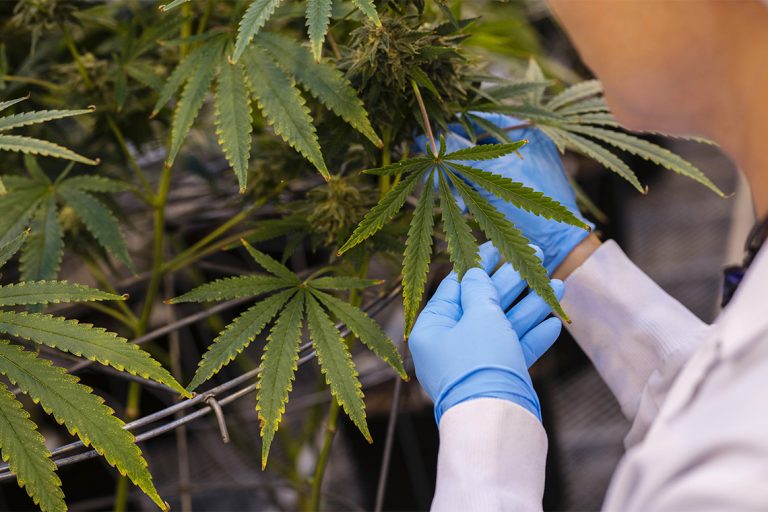
LOS ANGELES- Recent research conducted by scientists at Cornell University in New York has opened a new avenue in the study of hemp, suggesting that cannabinoids produced by the plant may serve as a source for developing natural pesticides. This study, undertaken by the School of Integrative Plant Science at Cornell AgriTech’s College of Agriculture and Life Sciences (CALS), has found a notable correlation between higher cannabinoid concentrations in hemp leaves and reduced damage from chewing insects.
The Cornell research team observed that leaves with a richer cannabinoid content exhibited less insect damage compared to those with lower concentrations. This finding has spurred hopes of further research to potentially create new natural insecticides, likely aimed at non-edible plants due to the pharmacological effects of cannabinoids like CBDA, THCA, and GBGA, which transform into CBD, THC, and CBG respectively through decarboxylation upon heating.
Professor Larry Smart, a plant breeder at CALS and the senior author of the study, highlighted that while the intoxicating and medicinal effects of cannabinoids have been a subject of study since their discovery decades ago, little is known about why cannabis plants developed these substances. “It has been speculated that they are defensive compounds,” Smart said, pointing to the tendency of such compounds to accumulate in female flowers for seed protection, a common trait in plants.
Despite these speculations, no comprehensive experimental evidence had been established to directly link cannabinoid accumulation to detrimental effects on insects, until now. Cornell’s Hemp Breeding Program, initiated in 2017, played a pivotal role in this discovery. The program began by evaluating various commercially available hemp cultivars, during which the researchers noticed that Ukrainian hemp varieties lacking cannabinoids were more susceptible to Japanese beetle damage compared to those producing cannabinoids.
In controlled studies using isolated CBDA and CBGA, the team found that increasing cannabinoid concentrations led to reduced growth and survival rates in insect larvae. The study did not include THCA due to federal THC limits on hemp crops.
George Stack, a postdoctoral researcher in Smart’s lab and co-author of the study, notes that this research provides insights into the natural defensive mechanisms of cannabinoids and could help develop THC-compliant hemp cultivars with these inherent protections against herbivores. The team plans to extend their investigation to other pests like aphids, although the research faces challenges due to federal marijuana laws.
Stack emphasizes the potential of cannabinoids as pesticides but acknowledges the regulatory hurdles and the need for more studies to understand their effectiveness against various pests. This groundbreaking research at Cornell University thus not only contributes to our understanding of hemp’s ecological role but also opens up possibilities for environmentally friendly pest control solutions in agriculture.
ABOUT HCN NEWSWIRE

HCN Newswire covers cannabis business and finance, from capital markets and companies to policy, retail, and emerging-market developments. We follow the decisions, deals, and market shifts shaping the industry.
KEEP READING