Cannabis Users Trust Dispensary Staff Over Doctors, Federal Study Finds
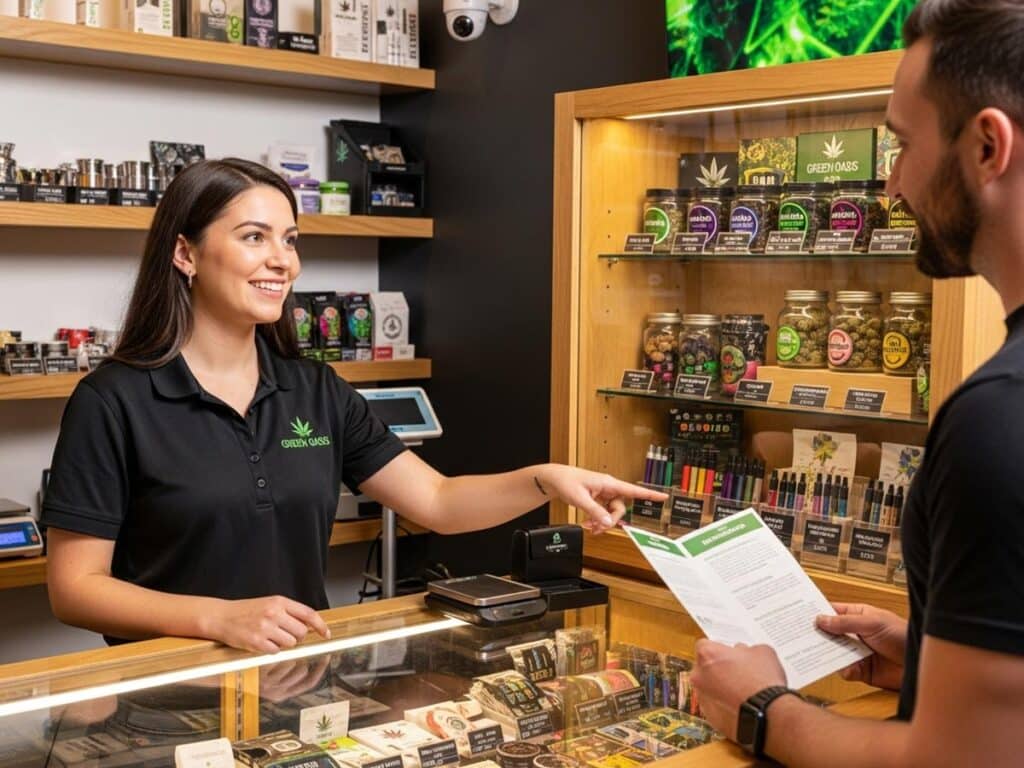






LOS ANGELES – People who use Cannabis trust dispensary staff more than healthcare providers or government agencies for information about the substance, according to a study published in the journal Drugs: Education, Prevention and Policy. Researchers from the University of California, Johns Hopkins University, and several other institutions surveyed 1,023 U.S. adults aged 18-plus who had used a THC-containing product in the previous month.
On a five-point trust scale, dispensary employees scored 3.7, ahead of friends at 3.5, healthcare providers at 3.4, and state and federal government officials, who both landed at 2.9. Social media posts and other cannabis sellers came in last at 2.6 each.
The study was funded by the National Institute on Drug Abuse (NIDA) – a federal body that has historically held a cautious view of Cannabis use. That institutional pedigree gives the findings a weight they would not carry coming from industry-affiliated sources.
However, the bigger picture is more complex. When respondents were asked specifically about Cannabis for medical purposes, the trust calculus shifted:
- healthcare providers topped the list at 55%,
- dispensary staff came in second at 20%,
- friends at 8%, and
- social media at 5%.
The opposite held true for recreational use. Dispensary staff were the top choice at 47%, followed by friends at 37%, social media at 7%, and healthcare providers at just 4%.
That split reveals that consumers make a functional distinction depending on the context. They turn to medical professionals when a decision feels clinical, and to budtenders when they want working, practical guidance.
The researchers were direct in their conclusions. The industry has outrun the science. “Scientific and medical information about cannabis lags behind emerging cannabis markets,” they wrote, noting that as a result, “many individuals who use cannabis turn to non-healthcare sources for trustworthy information.” Their recommendation was equally pointed. There is a pressing “need for integration of cannabis core competencies and minimum knowledge standards into healthcare provider education.” In plain terms, the medical community needs to catch up.
That gap carries real-world consequences. Dispensary staff are not licensed clinicians. Most states impose no standardized training requirements on budtenders, and their guidance, however trusted, carries no clinical accountability. A consumer managing a chronic condition is working around that reality every time they step into a store.
Overall, the findings cut in both directions. Dispensaries have built genuine trust with their clientele that is no small achievement for an industry still operating under federal prohibition and fighting for mainstream legitimacy on multiple fronts and channels. Importantly, trust creates responsibility, and the data suggests that budtenders are now absorbing a counseling role that the broader healthcare system has so far declined to fill.
Image courtesy: elevationhqnyc.com
About the Author: HCN News Team

Related Posts