Why the Endocannabinoid System Is the Future of Cannabis Medicine






NEW YORK- Cannabis medicine is entering a more serious phase.
For years, the conversation has focused on pain, sleep, anxiety, appetite, and symptom relief. Those remain important, but they may only be the beginning. The deeper opportunity is understanding how Cannabis interacts with one of the body’s most important regulatory networks: the endocannabinoid system.
The endocannabinoid system, or ECS, is the reason Cannabis can affect so many different areas of human health. It helps regulate appetite, metabolism, inflammation, pain, stress response, mood, neurological signaling, and immune balance. In other words, Cannabis is not acting on a random target. It is interacting with a system the body already uses to maintain internal stability.
That is why the ECS matters so much to the future of cannabinoid medicine.

Most discussions about health focus on individual systems: metabolism, the immune system, the brain, or the nervous system. What is often missed is that these systems do not operate independently. They are coordinated. The ECS functions as one of the body’s major coordination systems, helping determine how different biological processes are activated, regulated, and resolved.
This is what makes Cannabis medicine so interesting. Cannabinoids such as THC, CBD, and other compounds found in the plant interact with a system that already exists inside the human body. The point is not that Cannabis creates an entirely new biological pathway. The point is that Cannabis compounds can influence a regulatory network that is already involved in how the body manages balance.
The ECS is made up of three primary components: endocannabinoids produced by the body, receptors known as CB1 and CB2, and enzymes that break down signaling molecules after they are used. These components work together dynamically. Endocannabinoids are produced on demand, bind to receptors, and are then quickly broken down. This allows the system to respond in real time.
Research published in journals such as Physiological Reviews has identified the ECS as a key regulator of homeostasis, the process through which the body maintains internal stability.
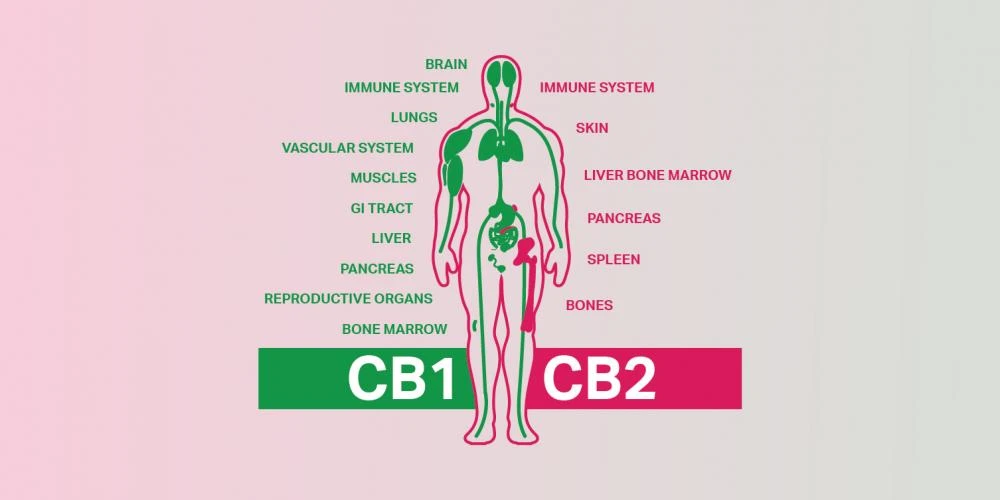
CB1 receptors are concentrated in the brain and central nervous system. They influence mood, cognition, appetite, pain perception, and neurological activity. CB2 receptors are more common in immune cells and peripheral tissues, where they help regulate inflammation and immune response.
This receptor distribution helps explain why Cannabis can have such broad effects. It is not because the plant is vague or mystical. It is because the ECS sits across multiple systems at once.

That matters for Cannabis medicine because the industry is moving beyond broad claims and generic formulations. The next stage will require more precision: which cannabinoids, in which ratios, delivered in which formats, for which biological targets, and for which patient populations.
THC and CBD are only the beginning of that conversation.
THC binds directly to CB1 receptors, which helps explain its effects on mood, appetite, pain perception, and neurological signaling. CBD works more indirectly, influencing how the ECS functions and affecting enzyme activity involved in endocannabinoid regulation. Other cannabinoids and plant compounds may also play important roles, especially as research expands into minor cannabinoids, terpene interactions, and targeted formulations.
Research published in Nature Reviews Drug Discovery and Annual Review of Pharmacology and Toxicology has mapped many of these interactions in detail. The larger point is clear: cannabinoids matter because they interact with a system that helps regulate the body itself.
The ECS also plays a direct role in metabolic regulation. It influences appetite, energy storage, lipid metabolism, and insulin sensitivity. Research in Nature Reviews Endocrinology shows that dysregulation of CB1 signaling is associated with obesity and metabolic dysfunction. This is one reason metabolic health may become one of the most important frontiers in cannabinoid medicine.
At the same time, the ECS is deeply involved in inflammation. CB2 receptor signaling has been shown to influence immune response and support the resolution phase of inflammation, as outlined in Nature Reviews Immunology. This matters because chronic inflammation sits at the center of many modern diseases, including cardiovascular disease, diabetes, neurodegenerative conditions, pain disorders, and age-related decline.
The ECS also plays an important role in the brain. It helps regulate how neurons communicate, how the body responds to stress, and how emotional and cognitive processes are balanced. ECS dysfunction has been linked in research to anxiety, depression, and neurodegenerative disease.

Taken together, the ECS connects three of the biggest areas in modern health: metabolism, inflammation, and neurological function.
That is why Cannabis medicine should not be viewed only as a tool for symptom relief. The more important opportunity may be system regulation. If cannabinoid-based therapies can be developed with greater precision, they may help support the body’s ability to regulate inflammation, metabolism, stress response, pain, appetite, and cellular balance.
This is also why rescheduling and regulatory reform matter. As Cannabis moves further into medical research and mainstream healthcare, the ECS becomes more than a scientific curiosity. It becomes the foundation for better product development, stronger clinical research, more targeted formulations, and a more credible medical Cannabis industry.
Without structure, cannabinoid outcomes can be inconsistent. With precision, cannabinoids may be able to influence regulatory systems in a more targeted and clinically meaningful way.
AULV Health is built around this understanding. The company does not treat the ECS as an isolated target. It views the ECS as part of a broader biological network that includes metabolism, inflammation, immune balance, and healthy aging. The focus is on how these systems interact, how they become dysregulated, and how cannabinoid-based solutions may help restore balance.
“The endocannabinoid system is one of the most important regulatory networks in the body, yet it’s barely understood in mainstream healthcare. Once you understand how it connects metabolism and inflammation, the entire picture changes.”
— Jay Patel
The broader implication is straightforward.
Cannabis medicine is not just about treating isolated symptoms. It is about understanding the regulatory systems that shape human health.
The ECS sits at the center of that conversation.
As cannabinoid science advances, the companies that understand this system most clearly may help define the next era of Cannabis medicine: one focused on precision, regulation, metabolic health, inflammation, and healthy aging.
Follow Highly Capitalized Network–HCN for rolling business and finance news across Cannabis, psychedelics, and wellness. Subscribe at highlycapitalized.com for deeper analysis, executive interviews, and industry insights. AULV Health is advancing next-generation metabolic and cannabinoid-based solutions focused on inflammation, metabolic dysfunction, and healthy aging.
About the Author: HCN News Team

Related Posts