Trump’s Rescheduling Order Ignites State Cannabis Momentum in Pennsylvania, Tennessee, and Wyoming
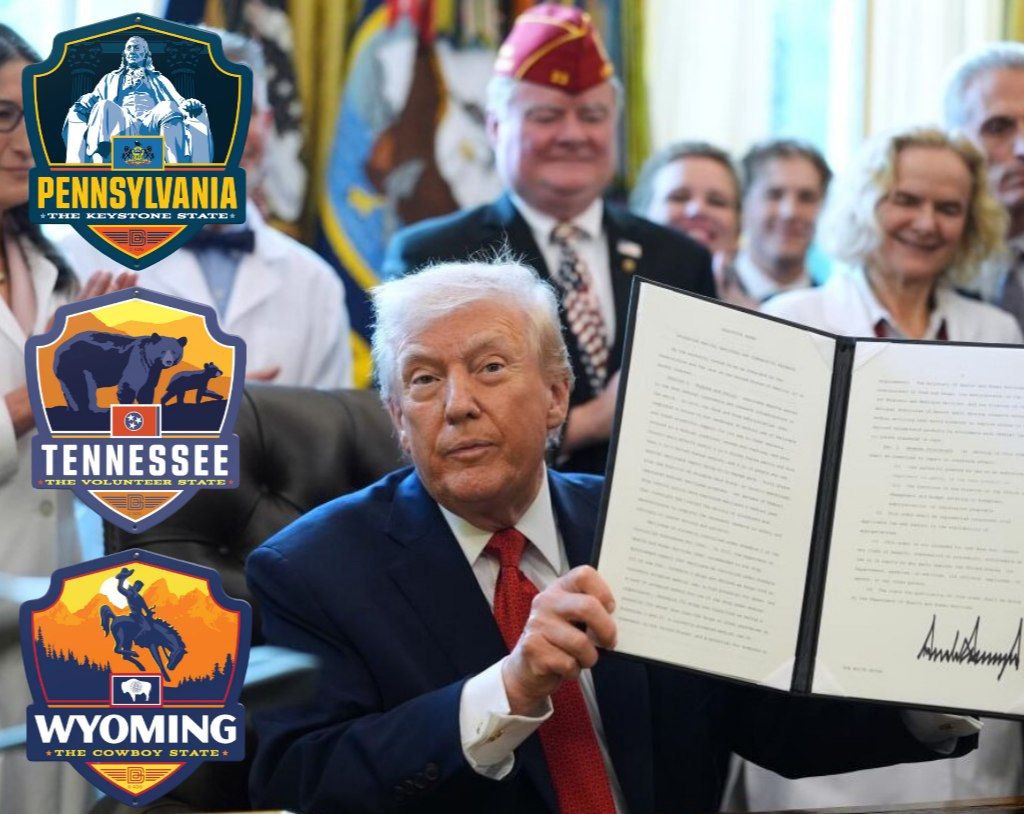






LOS ANGELES – President Donald Trump’s directive last week to fast-track Cannabis’s rescheduling has handed lawmakers in several conservative-leaning states a timely political opening to advance Cannabis reforms. The executive order, signed on December 18, directs the attorney general to complete the long-pending rulemaking process without delay, acknowledging Cannabis’s accepted medical applications and lower risk of dependence compared with Schedule I’s heroin. While the change stops short of federal recreational legalization, officials in Pennsylvania, Tennessee, and Wyoming see it as a green light to build on their own medical programs or pursue adult-use markets.
Once finalized, Schedule III status would eliminate the IRS’s Section 280E penalty, which currently bars Cannabis businesses from deducting ordinary expenses and inflates their effective tax rates above 70% in many cases. It would also streamline banking access for operators wary of federal prohibitions and open doors to more clinical trials, potentially validating therapeutic claims for conditions like cancer, chronic pain, depression, epilepsy, anxiety, PTSD, and more.
In Pennsylvania, where medical Cannabis has operated since 2016 but recreational proposals have repeatedly faltered in the Republican-controlled Senate, the order has bipartisan lawmakers drawing direct lines to next year’s session. “This gives Republican colleagues who hesitated before the cover they need to back reform,” said state Rep. Emily Kinkead, a Democrat co-sponsoring a legalization bill with Republican Rep. Abby Major. Kinkead, who rarely aligns with the president on policy, called the rescheduling “long overdue” and pegged it as a catalyst for generating hundreds of millions in annual revenue, thousands of jobs, and pathways to expunge past convictions. Major echoed that sentiment, pointing to polls showing 74% public support: “The White House signal today shows Republicans can take the lead here too – we plan to deliver in Harrisburg.”
Tennessee, another holdout with a limited medical pilot program tied up in court challenges, is registering quieter but notable ripples. House Speaker Cameron Sexton, a Republican, labeled the federal action “a first step” that raises practical questions about production standards and FDA oversight before any expansion. Majority Leader William Lamberth added that lawmakers would weigh the evidence-based reclassification in crafting rules for controlled substances, signaling openness to tweaks in the state’s restrictive framework. Democratic Sen. London Lamar went further, arguing that if federal policy can catch up to reality, “Tennessee should follow suit” to cut incarceration costs, boost research, and level the playing field with neighbors like Kentucky. With GOP dominance in Nashville, analysts view the order as diluting traditional objections rooted in Schedule I’s blanket “no medical value” label.
Wyoming presents a more mechanical pathway. The state’s 2017 law requires its attorney general to sync controlled substance schedules with federal changes within 30 days or justify deviations after public input, a provision that could force a reckoning on medical access, where Wyoming lags as one of just three states without any program. Attorney General Keith Kautz, a Republican, pledged to “simply adhere to the law” once the DEA acts, though he underscored Wyoming’s historical aversion to cannabis prescriptions. Interim U.S. Attorney Darin Smith cautioned that federal enforcement against possession and sales persists, but the downgrade might soften penalties in borderline cases pending new guidelines. Local observers suggest this could embolden a dormant ballot initiative for medical Cannabis, especially as Colorado’s market draws cross-border traffic.
Beyond these states, the order’s ripple effects extend to places like Florida and North Dakota, where recent voter-approved medical expansions now face less federal friction. Schedule III implementation could unlock $4 billion in untapped investment nationwide by easing compliance burdens, though critics note persistent barriers like interstate commerce bans.
Critically, this federal pivot underscores a broader realignment in Republican circles, where once-unassailable “war on drugs” rhetoric yields to pragmatic arguments on revenue and public health. Yet the rescheduling’s true leverage lies in execution. The DEA’s final rule could still take months, and without congressional action on descheduling or banking protections like the SAFE Act, state gains remain incremental. Trump’s step, while bold, reinforces Cannabis’s medical legitimacy without upending enforcement priorities, a calculated balance that leaves recreational advocates pressing for more.
From the vantage of the Cannabis sector, this development marks less a revolution than a refinement, one that could stabilize markets strained by tax inequities and credit droughts.
Will the executive nudge convert into statutes in 2026 legislatures, or fade as another chapter in federal-state tension?
The data points to opportunity, but history demands vigilance.
Photo: Los Angeles Times/States’ emblems courtesy of Anderson Design Group
About the Author: HCN News Team

Related Posts