The Supreme Court Declines to Resolve Federal Cannabis Prohibition—And the Silence Speaks Volumes
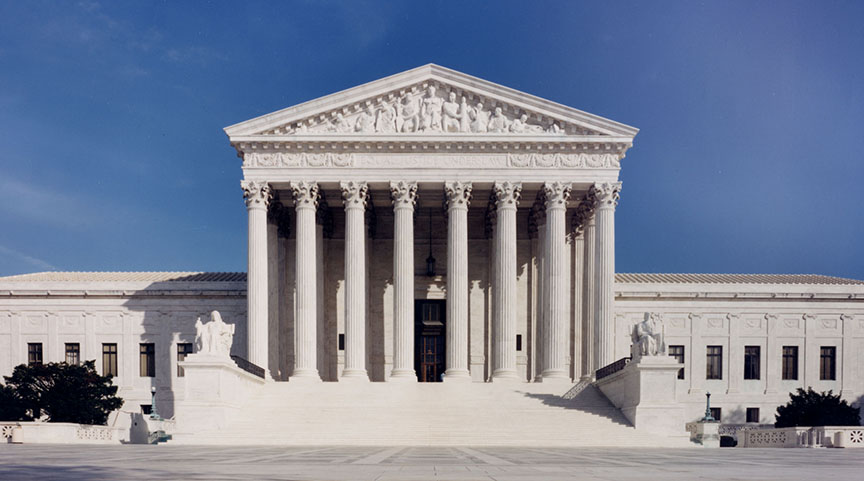





WASHINGTON, D.C. – In its December Orders List, the U.S. Supreme Court declined to hear a case that many hoped would finally force a reckoning between federal Cannabis prohibition and state-legal markets.
By declining review, the Court effectively allows existing federal law to remain in place without comment, despite the widespread legalization of Cannabis at the state level.
The case was brought by several state-licensed Cannabis businesses that argued the federal ban conflicts with state regulatory systems and exceeds Congress’s constitutional authority. The petition asked the Court to resolve the growing legal and economic contradictions created by enforcing nationwide prohibition while states openly license and tax Cannabis production and sales.
The plaintiffs included Canna Provisions, a Massachusetts-based retail operator; Verano Holdings, one of the country’s largest multistate operators; Wiseacre Farm, a licensed cultivator; and Gyasi Sellers, founder of Cannabis delivery company Treevit. Represented by Boies Schiller Flexner LLP, they argued that applying the Controlled Substances Act to intrastate, state-licensed Cannabis activity no longer fits within Congress’s Commerce Clause authority, particularly given the comprehensive regulatory frameworks states have put in place.
A denial of certiorari does not mean the Court endorsed federal prohibition, but it does mean the justices chose not to intervene. Historically, when the Court passes on a major constitutional question of this scale, it often signals a reluctance to take up similar challenges in the near future. Legal experts widely view denials in high-profile cases as a strong indicator that the Court is content to let lower court rulings stand for the foreseeable future.

The rejection preserves uncertainty for state-legal Cannabis businesses, which remain subject to federal law despite operating openly under state authorization. Without Supreme Court guidance, conflicts between federal enforcement authority and state legalization frameworks are likely to persist, absent any change in federal law.
The timing of the denial is notable given ongoing discussion around rescheduling Cannabis under the Controlled Substances Act. While moving Cannabis to Schedule III would eliminate Section 280E and improve operator economics, it would not resolve the underlying constitutional conflict raised in this case. Rescheduling leaves federal control intact, does not authorize interstate commerce, and does not clarify whether Congress’s authority extends to prohibiting or tightly regulating intrastate, state-licensed Cannabis activity.
What makes the Court’s decision harder to reconcile is where it appears willing to spend its institutional capital. There is no meaningful public movement to overturn birthright citizenship, a principle explicitly defined in the Fourteenth Amendment and reaffirmed for more than a century. It is settled constitutional law, not an unresolved conflict created by competing state regimes. Yet the Court has shown interest in revisiting it.
Cannabis occupies the opposite position. According to Gallup, Pew Research Center, and other major national surveys, a clear majority of Americans support legalizing Cannabis, with Gallup polling consistently showing support at or above roughly 70 percent in recent years. Support spans political parties, age groups, and states.
Pew has similarly found majority support across nearly every demographic category measured. By any objective measure, Cannabis legalization reflects durable public consensus rather than a fringe position.
The Court’s refusal to engage with federal Cannabis prohibition therefore appears disconnected not only from economic reality, but from democratic reality. An industry licensed by states, supported by voters, regulated by public agencies, and relied upon for tax revenue and employment remains legally unresolved at the federal level. At the same time, constitutional text that is neither ambiguous nor widely contested is elevated for judicial review.
The Supreme Court technically retains the ability to hear a future case on Cannabis prohibition. But this denial sharply reduces the odds of meaningful judicial review anytime soon, leaving federal Cannabis prohibition unresolved at the highest level of the judiciary.
For now, Cannabis remains legal everywhere and nowhere at the same time—sanctioned by states, constrained by federal law, and left in limbo by a Court that has chosen silence over resolution.
About the Author: HCN News Team

Related Posts