Resurrected Ancient Cannabis Enzymes Pave the Way for Efficient Cannabinoid Production






LOS ANGELES – A team of biologists has brought back to life enzymes from Cannabis plants that roamed Earth millions of years ago, uncovering a blueprint for producing medicinal compounds more effectively than today’s methods allow.
The work, detailed in a study published last month in the Plant Biotechnology Journal, traces the deep roots of cannabinoids to a time when the plant’s chemical toolkit was broader and more adaptable. By reconstructing these long-gone lipids, scientists at Wageningen University & Research demonstrated how early Cannabis relatives churned out multiple cannabinoids from a single precursor, a flexibility that modern strains have largely traded for precision.
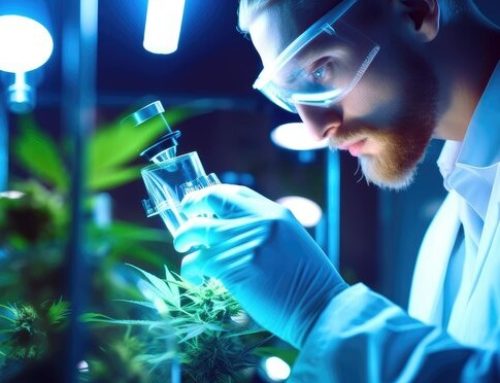
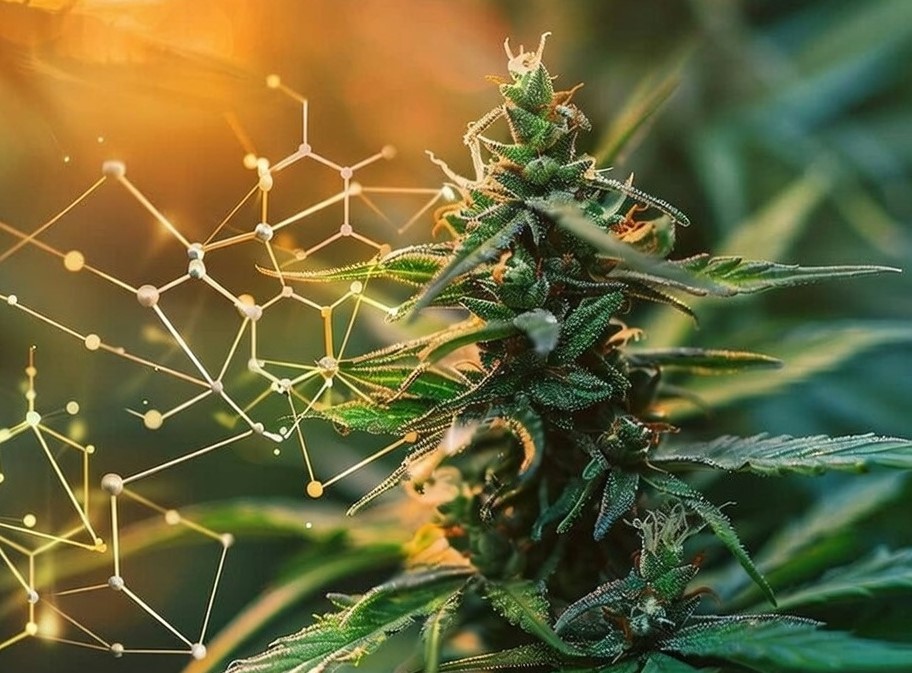
At the core of the project lies ancestral sequence reconstruction, a computational approach that sifts through DNA from living plants to rebuild genes from extinct forebears. Led by evolutionary biologist Robin van Velzen, the scientists zeroed in on cannabinoid oxidocyclases, the enzymes that convert cannabigerolic acid (CBGA) into powerhouse molecules like tetrahydrocannabinolic acid (THCA), cannabidiolic acid (CBDA) and cannabichromenic acid (CBCA). They revived three such enzymes from Cannabis’s lineage, dating back roughly 25-27 million years, just after the plant split from relatives like hops.
What emerged in the lab surprised the team. These ancient enzymes proved far more versatile than their descendants. One, dubbed Ca after its position in the family tree, generated a cocktail: 60% THCA, 30% CBDA and 10% CBCA under neutral conditions. Another, A1A2a, leaned toward THCA at 87% [!] but still yielded 13% CBCA – a cannabinoid linked to reducing inflammation and easing pain, yet rarely abundant in commercial varieties. Unlike today’s highly tuned enzymes, which lock onto one product with laser focus, these precursors multitasked, a trait that likely helped prehistoric Cannabis fend off herbivores and microbes with a scattershot defense.
Over time, gene duplications carved out specialists: one branch honed in on THCA for psychoactive punch, another on CBDA for non-intoxicating relief. But that narrowing came at a cost. Modern enzymes often falter in lab settings. They’re finicky at non-acidic pH levels and express poorly in yeast, the workhorse of biotech fermentation. The resurrected versions sidestep those issues. They tolerate a wider pH range and pump out proteins at levels 1.5 to four times higher in microbial hosts. Van Velzen’s group even engineered hybrids by grafting ancient scaffolds with modern tweaks, yielding a CBDA producer with 3.4 times the activity of its contemporary counterpart.
For the Cannabis industry, the findings point to a manufacturing upgrade. Current extraction from cultivated plants or synthetic routes drives up costs, with CBCA especially tough to scale due to its scarcity – less than 1% in most strains. Analysts estimate that biotech cannabinoids already command premiums in pharmaceuticals; efficiencies here could drop prices 50% or more for anti-inflammatory formulations, opening doors to broader clinical trials for conditions like arthritis or neuroinflammation.
Image: cbd-alchemy.com
About the Author: HCN News Team

Related Posts