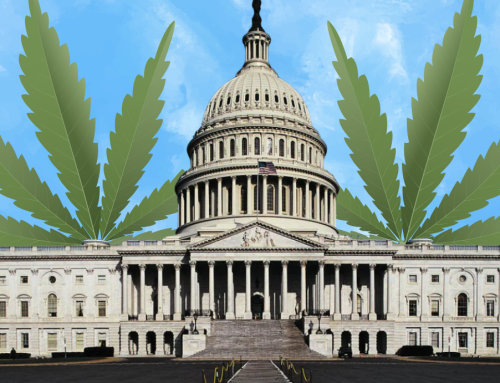
RESPECT: House Lawmakers Introduce Cannabis Equity Resolution






WASHINGTON – A group of eight House lawmakers, led by members of the Congressional Cannabis Caucus, filed a resolution aimed at bolstering fair access to the burgeoning Cannabis sector for communities long sidelined by federal prohibition. The measure, titled the Realizing Equitable & Sustainable Participation in Emerging Cannabis Trades Resolution, or RESPECT, calls on states and municipalities to implement targeted reforms that could reshape participation in a market now valued at over $43 billion annually.
Reps. Ilhan Omar (D-Minn.), Troy Carter (D-La.), Lateefah Simon (D-Calif.) and Dina Titus (D-Nev.) spearheaded the introduction, joined by cosponsors Eleanor Holmes Norton (D-D.C.), Hank Johnson (D-Ga.), Barbara Lee (D-Calif.), and Bonnie Watson Coleman (D-N.J.). In a joint statement, the lead sponsors emphasized the need to channel industry gains toward those bearing the brunt of past enforcement: “This resolution presses for policies that clear records, fund community reinvestment and streamline licensing for entrepreneurs from affected neighborhoods.”
At its core, the non-binding resolution outlines a dozen recommendations, from automatic expungement of nonviolent Cannabis convictions to priority licensing for social equity applicants and dedicated revenue streams for restorative justice programs. It also urges the U.S. delegation at the United Nations to champion international decriminalization efforts, a nod to the global ripple effects of America’s policy shifts. Endorsements rolled in quickly from advocacy groups including the Drug Policy Alliance and NORML, which hailed it as “a blueprint for turning legalization into genuine repair.”
This filing marks the latest iteration of RESPECT, first proposed in 2019 and refreshed in prior sessions without passage. With Cannabis legalized for adult use in 24 states and medical access in 38, the timing aligns with a federal landscape in flux – DEA rescheduling proceedings drag on, and state markets report uneven equity outcomes. Data from the Minority Cannabis Business Association shows that just 20% of licenses in key markets go to equity-focused operators, despite mandates in places like Illinois and New Jersey. Critics, including some industry veterans, question whether a resolution alone can enforce compliance without tied funding or penalties, pointing to California’s stalled equity rollout where only a fraction of promised licenses have materialized.
Yet, the proposal’s strength lies in its focus on measurable steps. For instance, if adopted widely, tying tax dollars to community grants could inject hundreds of millions of dollars yearly into underserved areas. For operators, it signals a maturing sector where compliance with equity metrics might soon factor into interstate commerce debates or banking relief.
In the industry, where we’ve tracked Cannabis valuations from seed rounds to multimillion exits, RESPECT underscores a fundamental shift: Investors and executives ignore equity at their peril.
Markets thrive on stability, and unresolved disparities risk regulatory backlash or consumer boycotts that could shave margins in an already competitive field. If states heed this call, it won’t rewrite federal law in a snap, but it could standardize a patchwork of rules, fostering the predictable environment that draws serious capital. Watch for hearings in 2026, as this one bears the hallmarks of meaningful progress in a divided Congress.
About the Author: HCN News Team

Related Posts