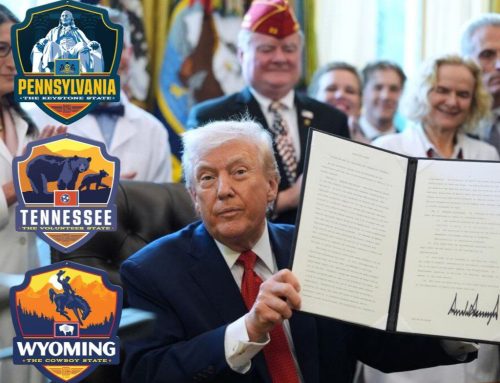
Republican State AGs Challenge Trump’s Cannabis Rescheduling Directive







LOS ANGELES – A coalition of Republican attorneys general from eight states has publicly rejected President Donald Trump’s recent Executive Order to reschedule Cannabis under the Controlled Substances Act, citing persistent risks to public safety and insufficient scientific backing for the change. The move highlights deepening rifts within the GOP on drug policy, even as the Cannabis industry endures an exhausting wait for potential tax relief from reclassification.
The opposition surfaced in a joint statement released by the attorneys general of Indiana, Iowa, Idaho, Kansas, Louisiana, Nebraska, Oklahoma, and Wyoming, who described the proposed downgrade as a misstep that ignores evidence of Cannabis’s high abuse potential and lack of accepted medical use. “We have seen firsthand the harm the drug has caused in our communities,” the group wrote, pointing to increased cases of impaired driving that complicate law enforcement efforts. South Dakota’s attorney general, Marty Jackley, echoed the concerns in a separate announcement, emphasizing that while the shift would not federalize recreational use, it could still erode strict state controls on medical access.
Trump’s order instructs Attorney General Pam Bondi to “take all necessary steps” to fast-track the administrative process for rescheduling, a step that would align Cannabis with substances like ketamine and anabolic steroids. Proponents, including the president [!], argue the change would facilitate research into therapeutic applications without opening doors to broad legalization, a position Trump reinforced by noting personal anecdotes of Cannabis aiding those with chronic conditions. Under current Schedule I status, Cannabis faces blanket federal prohibitions, including a tax code provision that bars businesses from deducting ordinary expenses, stifling profitability in states with legal markets.
This state-level pushback joins earlier critiques from congressional Republicans. Following previous attempts to persuade Trump to abandon the reclassification plan, even after the EO was signed, 22 GOP senators, led by North Carolina’s Ted Budd, warned that its implementation could boost foreign competitors, like China, while undermining workplace and road safety. A smaller group of nine House Republicans had raised similar alarms in August, claiming the reclassification lacks rigorous data and risks normalizing use among youth. Nebraska Senator Pete Ricketts, a longtime skeptic, co-signed the Senate letter and has consistently opposed easing restrictions, framing them as a threat to economic priorities.
From a business perspective, the discord highlights the Cannabis sector’s precarious position: 24 states now permit recreational sales, generating over $30 billion annually. Rescheduling could unlock more than $4.2 billion in annual tax savings [based on an average savings of $268,000 per dispensary and approximately 16,000 active locations nationwide] for operators by eliminating Section 280E, potentially stabilizing cash flows and attracting institutional investment. Yet the attorneys general’s stance signals likely legal hurdles, as states like Idaho and Wyoming maintain outright bans and could sue to block implementation, prolonging uncertainty for multistate operators.
Trump dismissed the critics, asserting broad public support for reform and framing the order as a targeted medical advance rather than a policy overreach. The Drug Enforcement Administration now holds the timeline, with a final rule possibly emerging by mid-2026, pending public comment and review.
For the Cannabis market, this episode reveals a party-line fracture that mirrors broader tensions between federal directives and state autonomy. As operators navigate compliance costs exceeding $1 billion yearly in legal states, the outcome will prove whether executive action can bridge divides or widen them further, a reminder that policy wins often demand consensus beyond the White House.
About the Author: HCN News Team

Related Posts