Why Metabolic Dysfunction May Be the Next Frontier for Cannabinoid Medicine







NEW YORK- Metabolism is the system that determines how the body produces, distributes, and uses energy, and it sits at the center of modern chronic disease. While it is often reduced to a discussion of calories or weight, metabolism is fundamentally a cellular process governed by hormonal signaling, mitochondrial function, and nutrient utilization. When it functions properly, energy is delivered efficiently, cellular processes remain stable, and the body maintains balance. When it becomes impaired, the effects extend across multiple organ systems, creating the conditions for disease.
This is why conditions that are traditionally viewed as separate—type 2 diabetes, cardiovascular disease, obesity, and liver disease—are increasingly understood as interconnected. They share a common biological foundation: metabolic dysfunction. According to the Centers for Disease Control and Prevention, more than 37 million Americans have diabetes and approximately 96 million are prediabetic. At the same time, cardiovascular disease remains the leading cause of death globally, accounting for roughly 18 million deaths annually based on data from the World Health Organization. These are not independent trends; they are different expressions of the same underlying breakdown in energy regulation.
At the core of this process is insulin, a hormone that enables cells to absorb glucose from the bloodstream. Under normal conditions, insulin rises in response to food intake, facilitates energy delivery, and returns to baseline. When metabolic systems begin to fail, cells become less responsive to insulin, a condition known as insulin resistance. Research published in The Lancet Diabetes & Endocrinology and Nature Reviews Endocrinology identifies insulin resistance as a central driver of metabolic disease, with studies in Diabetes Care suggesting it affects up to 40% of U.S. adults. As resistance develops, the body compensates by producing more insulin, leading to chronic hyperinsulinemia. The system is no longer regulating efficiently; it is compensating for dysfunction.
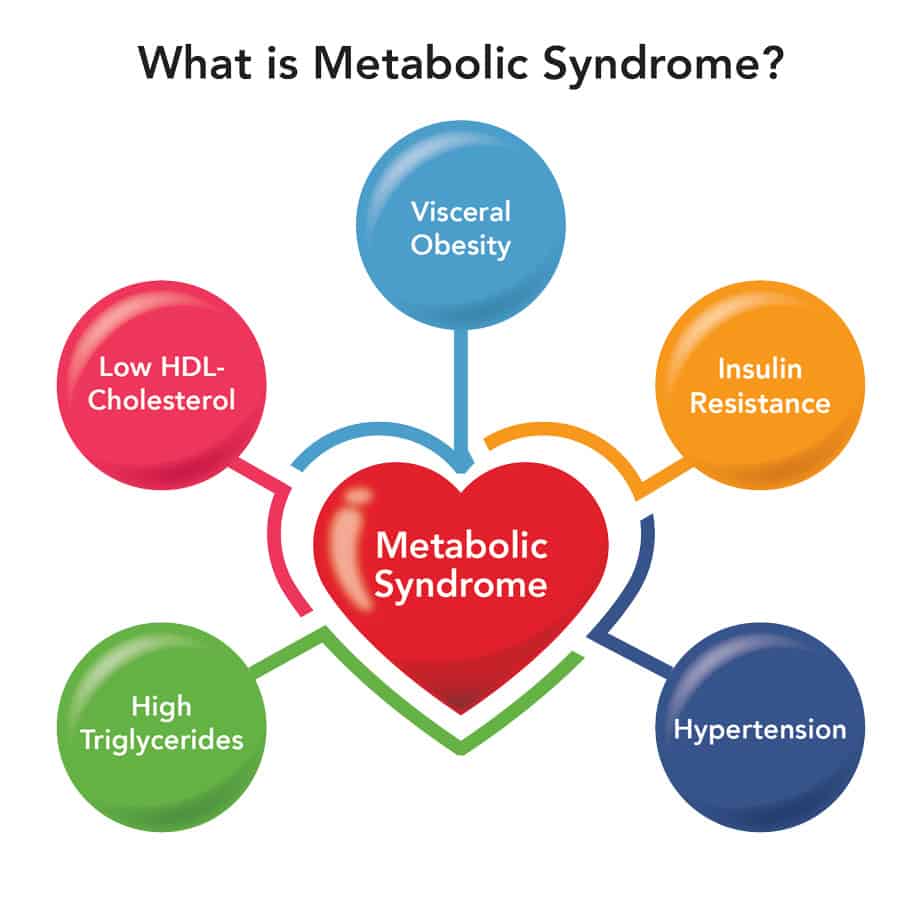
Chronic elevation of insulin shifts the body into a storage state. Instead of using energy efficiently, the body increasingly stores excess energy as fat, particularly in visceral regions surrounding organs. This contributes to abdominal fat accumulation, impaired lipid metabolism, elevated inflammatory signaling, and disruption of appetite regulation. Research from the National Institutes of Health has shown that hyperinsulinemia is not merely a marker of disease but an active driver of metabolic dysfunction, reinforcing the cycle of instability.
One of the most important consequences of this process is ectopic fat deposition, in which fat accumulates in organs such as the liver and pancreas rather than remaining in adipose tissue. This is a defining feature of Metabolic Dysfunction–Associated Steatotic Liver Disease (MASLD), a condition that affects an estimated 25–30% of the global population according to a meta-analysis published in The Lancet Gastroenterology & Hepatology. MASLD often develops without symptoms, yet it is strongly associated with insulin resistance, cardiovascular disease, and increased mortality. It is not simply a liver condition; it is a systemic signal that metabolic regulation has broken down.
At the cellular level, metabolic dysfunction is closely tied to mitochondrial performance. Mitochondria are responsible for producing ATP, the energy currency of the cell. Under healthy conditions, they convert nutrients into usable energy efficiently. Under metabolic stress, this process becomes impaired. Mitochondria produce less energy and more reactive oxygen species, leading to oxidative stress and cellular damage. Research published in Cell Metabolism and Nature Metabolism links mitochondrial dysfunction to insulin resistance, aging, and neurodegenerative disease, highlighting how energy failure at the cellular level drives system-level decline.

This creates a reinforcing cycle. Reduced energy production increases cellular stress, which activates inflammatory pathways. Inflammation further disrupts metabolic processes, leading to greater dysfunction. Over time, the system shifts from self-correcting to self-reinforcing. A study published in JAMA found that fewer than 12% of American adults meet the criteria for metabolic health, indicating that metabolic dysfunction is no longer an exception but a baseline condition.
The implications extend beyond traditional metabolic disease. Impaired energy regulation contributes to cardiovascular disease through vascular inflammation, neurological decline through reduced energy delivery to the brain, and immune dysfunction through chronic inflammatory signaling. This is why addressing individual symptoms is insufficient; the underlying system remains compromised.
AULV Health is built around this recognition. Rather than focusing on individual disease categories, the company targets the systems that regulate energy balance. This includes improving insulin sensitivity, reducing ectopic fat accumulation, supporting mitochondrial efficiency, and stabilizing inflammatory signaling. The objective is not to override the system with external interventions, but to restore its ability to function as designed.
“Metabolic dysfunction is the common denominator across most chronic conditions we see today. If you don’t address how the body produces and manages energy, you’re not solving the problem—you’re managing the symptoms.”
— Jay Patel
This system-level perspective also creates a bridge to regulatory networks such as the endocannabinoid system, which plays a role in appetite, lipid metabolism, and insulin sensitivity. Emerging research suggests that modulating these pathways may influence metabolic outcomes, reinforcing the idea that metabolism cannot be viewed in isolation.
Cannabis medicine is moving beyond pain, sleep, and anxiety. One of the most important emerging opportunities is metabolic health. The reason is the endocannabinoid system, a regulatory network involved in appetite, inflammation, lipid metabolism, insulin sensitivity, and energy balance. As metabolic dysfunction becomes one of the defining health challenges of the modern era, cannabinoid-based science may have a role to play in addressing the underlying systems that drive chronic disease.
The core insight is direct. Metabolic dysfunction is not one condition among many. It is the platform on which many conditions develop. Restore that system, and multiple outcomes begin to shift.
Follow Highly Capitalized Network–HCN for rolling business and finance news across Cannabis, psychedelics, and wellness. Subscribe at highlycapitalized.com for deeper analysis, executive interviews, and industry insights. AULV Health is advancing next-generation metabolic and cannabinoid-based solutions focused on inflammation, metabolic dysfunction, and healthy aging.
About the Author: HCN News Team

Related Posts