ANALYSIS: When Oil Spikes, Cannabis Feels It Too
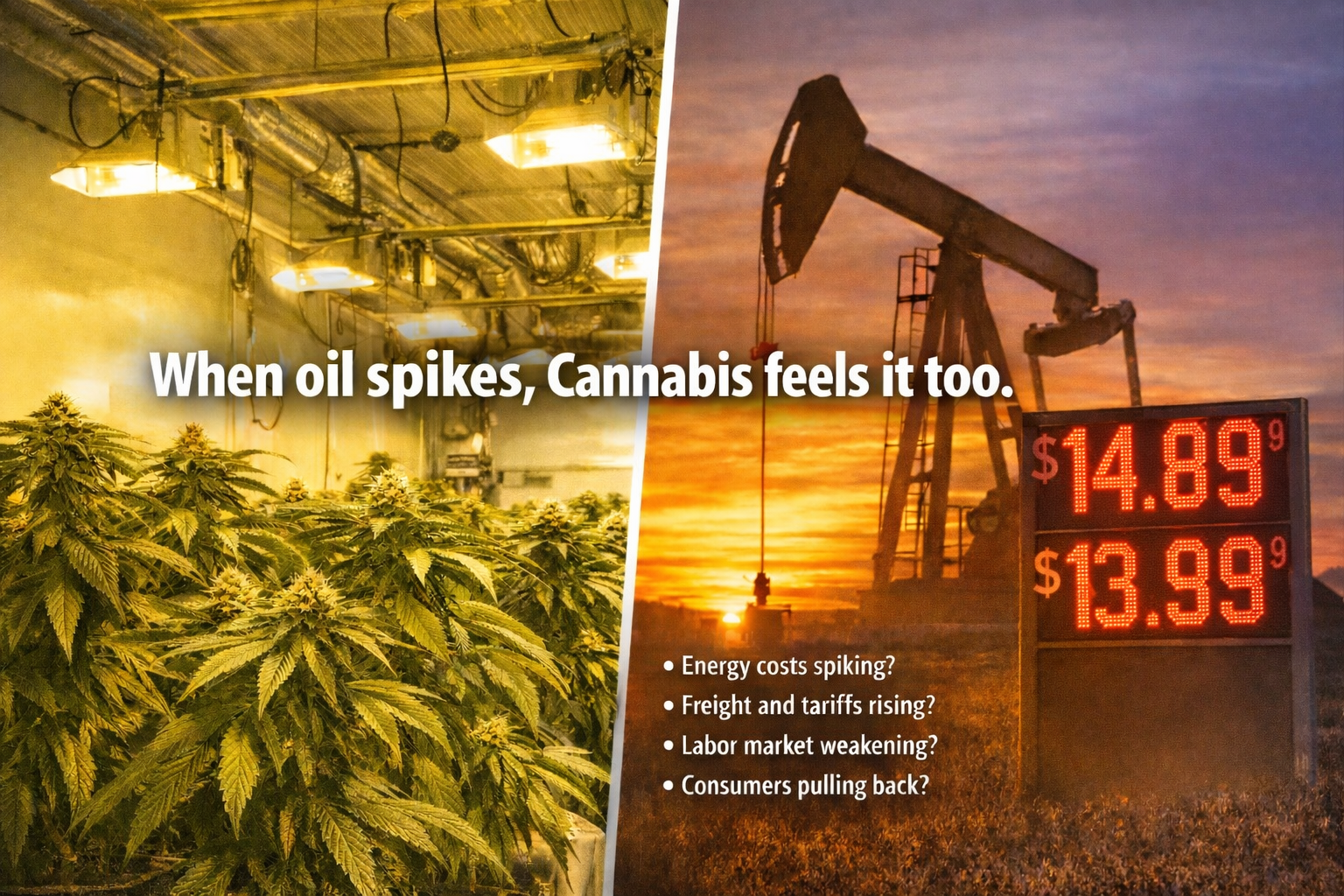






NEW YORK–Energy markets reacted immediately following the U.S.-Israeli strike on Iran. The operation — named by the Department of War (formally the U.S. Department of Defense)— raised fears of disruption to energy flows through the Strait of Hormuz.
Before the attack, Brent crude was trading in the high-$70s per barrel. Within days it surged above $100, a dramatic move as traders priced in the risk of disruption to Gulf energy flows.
You might think this is far away, but it will profoundly impact the cannabis industry too.
The reason is simple: roughly 20% of the world’s oil passes through the Strait of Hormuz, one of the most important energy chokepoints on the planet.
At the same time, Qatar’s energy minister has warned that damage to Gulf energy infrastructure could take months to repair and that oil could reach $150 within days as supply disruptions ripple through global markets.

Taken together, those two dynamics matter. If energy infrastructure across the Gulf remains damaged while shipping through the Strait of Hormuz is constrained, oil prices moving beyond $200 is not difficult to imagine.
For the Cannabis industry, that possibility carries real economic consequences.
Cannabis companies are not part of the energy sector, but they are deeply exposed to energy shocks through costs. When oil spikes, the effects move quickly through cultivation, fertilizers, logistics, packaging, consumer spending, and capital markets.
The first pressure point is electricity.
Indoor Cannabis cultivation is one of the most energy-intensive forms of agriculture. Lighting systems, HVAC equipment, dehumidification systems, and environmental controls run continuously in controlled grow environments. Electricity is already one of the largest operating expenses for many producers.
If oil and natural gas prices remain elevated, electricity costs typically follow. That raises the cost per pound for indoor cultivators at a time when wholesale Cannabis prices in many markets are already under pressure.
The second pressure point is fertilizer, particularly nitrogen.
Nitrogen fertilizer production depends heavily on natural gas through the Haber-Bosch process. When natural gas prices rise, nitrogen prices typically follow. For greenhouse and outdoor Cannabis cultivation, nitrogen plays a central role in vegetative growth and plant yield.
Higher fertilizer costs therefore translate directly into higher cultivation expenses across a large portion of the industry.
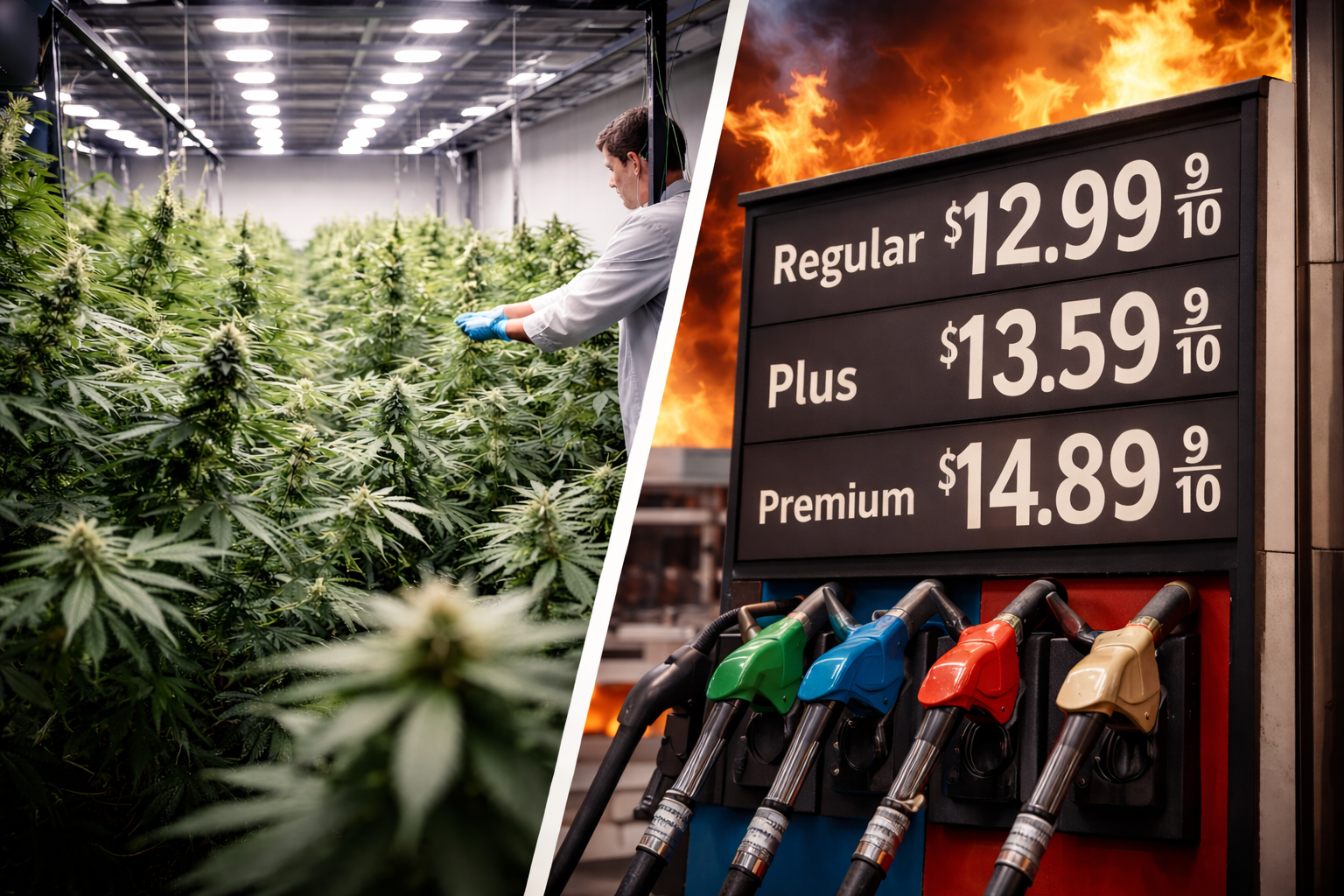
The third pressure point is transportation.
Cannabis supply chains rely heavily on trucking networks moving product from cultivators to processors, then to distributors and retailers across state markets. Higher oil prices generally mean higher diesel prices, increasing freight and distribution costs throughout the supply chain.
The fourth pressure point is packaging and hardware.
Many Cannabis products rely on petroleum-based materials used in vape cartridges, pre-roll tubes, jars, lids, and child-resistant packaging. When oil prices rise, petrochemical inputs often become more expensive as well.
The broader consumer economy also matters.
Recent economic data shows the U.S. lost 92,000 jobs in a single month, raising concerns about slowing employment growth and consumer spending.
When gasoline prices rise sharply, households often tighten discretionary spending. Cannabis demand has historically shown resilience compared with many consumer categories, but it is still influenced by broader economic conditions.
Capital markets present another vulnerability.
The Cannabis industry already faces regulatory complexity, high taxes, and limited banking access. Additional macroeconomic volatility could make investors more cautious and make capital harder to secure for companies seeking expansion or refinancing.
Individually, none of these pressures necessarily destabilizes the industry.
But stacked together—higher electricity costs, rising fertilizer prices, more expensive logistics, increased packaging costs, softer consumer spending, and cautious investors—they create a far more difficult operating environment.
If crude were to move toward $200 per barrel or beyond, the effects would ripple through cultivation, fertilizers, freight, packaging, and consumer demand all at once.
For an industry already navigating tight margins and structural constraints, that kind of energy shock could accelerate consolidation and reward operators with the strongest balance sheets.
When oil spikes, Cannabis feels it too.
About the Author: HCN News Team

Related Posts