Study: Older Americans Are Turning to Cannabis as an Alternative to Pharmaceuticals







NEW YORK – Older Americans are increasingly looking at Cannabis not as a lifestyle product, but as a practical alternative to traditional pharmaceuticals. A new study highlighted by NORML points to a growing trend among adults aged 60 and older: many are turning to Cannabis products because they are dissatisfied with conventional medications, concerned about side effects, or looking for better ways to manage pain, sleep issues, anxiety, depression, and other age-related conditions. The study was published in JAMA Network Open by researchers affiliated with University of Utah and University of Colorado Boulder. (University of Utah Healthcare)
The research focused on 169 adults aged 60 and older in Colorado who were new or infrequent Cannabis users and were seeking edible Cannabis products to address pain, sleep problems, anxiety, or depression. The study was conducted between November 2021 and November 2023 as part of a larger clinical trial examining the effects of edible Cannabis on physical functioning, cognitive health, and well-being among older adults. (News-Medical)
These were not simply legacy consumers returning to the plant after decades away. Many were older adults approaching Cannabis for the first time because traditional approaches had not delivered acceptable results. According to the researchers, many participants were drawn to Cannabis because they wanted more effective or non-pharmaceutical options, while others were concerned about the adverse effects, dependency risks, or long-term burden of conventional medications. (University of Utah Healthcare)
That matters because it shows where the next phase of Cannabis demand may be heading. For years, much of the legal Cannabis industry was built around adult-use branding, potency, novelty, and retail experience. But older adults are not entering the market looking for the strongest product or the flashiest packaging. They are often looking for something far more specific: relief, predictability, lower perceived risk, and a better quality of life.
This is not simply a consumer trend. It is a healthcare signal. The older adult Cannabis market is growing at the same time that America is aging, chronic disease is rising, and patients are becoming more active in managing their own care. Separate research published in JAMA Network Open found that Cannabis use among older adults has been increasing in the United States, with prior studies showing past-year use among adults 65 and older rising from below 1% in 2005–2006 to 8.4% in 2022. (JAMA Network)
Other research has found similar momentum. A 2025 analysis led by researchers at NYU reported that marijuana use among U.S. adults aged 65 and older reached a new high, with 7% reporting use in the past month. Among older veterans, another JAMA Network Open study found that more than one in ten veterans aged 65 to 84 reported Cannabis use in the previous month. (New York University)
The key point is not that Cannabis is replacing pharmaceuticals across the board. It is that a meaningful number of older Americans are already evaluating Cannabis through a medical lens. For this population, Cannabis is often being considered in the context of pain, sleep, anxiety, depression, quality of life, and dissatisfaction with existing options.

That creates both an opportunity and a responsibility for the industry. Older consumers are often managing multiple health conditions and may already be taking prescription medications. They may also be more vulnerable to impairment, falls, confusion, cardiovascular effects, drug interactions, or accidental overconsumption, especially with edibles. The University of Utah researchers noted that many older adults make Cannabis decisions based on word of mouth rather than conversations with healthcare providers, underscoring the need for better clinical guidance and patient education. (University of Utah Healthcare)
This is where the Cannabis industry has to mature. The next wave of growth will not be won by companies that simply repackage adult-use products for older consumers. It will be won by companies that can provide consistency, credible education, product transparency, and outcome-focused formulations.
For older adults, the question is rarely, “How high will this get me?” The question is more likely to be whether a product can help with sleep, pain, anxiety, or daily function without creating unwanted side effects or interfering with existing medications. Those questions require a different kind of Cannabis company.
They require products designed around dose, onset time, cannabinoid ratios, tolerability, and clear instructions. They require retail staff trained to speak carefully with older adults. They require collaboration with clinicians, pharmacists, researchers, and caregivers. They also require honest communication about what Cannabis can and cannot do.
The study also highlights the need for stronger clinical evidence. Researchers emphasized that older adults need patient-centered guidance and accessible education to help them make informed decisions about edible Cannabis products for pain, sleep, and mental health concerns. (University of Utah Healthcare)
That is the real Cannabis 3.0 story. Cannabis is moving from novelty to function, from recreational positioning to medical relevance, and from “what product sells?” to “what outcome does this support?”
For companies operating in the medical Cannabis space, older adults may become one of the most important patient groups in the market. But they will also be one of the most demanding. They will need trust, evidence, clear labeling, consistent dosing, and products that do not feel like they were designed for someone half their age.
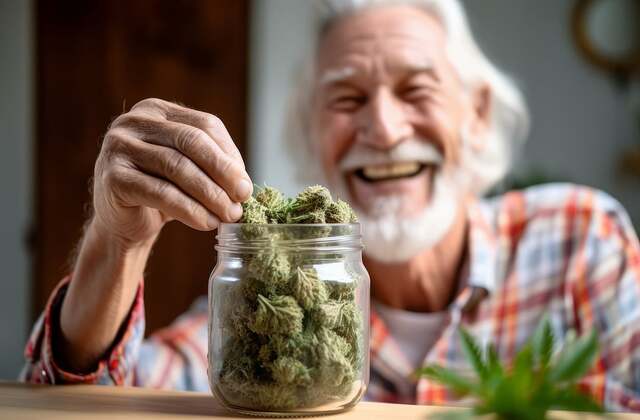
The industry should see this as a major inflection point. Older Americans are already seeking Cannabis as an alternative or adjunct to traditional pharmaceuticals. The question now is whether the Cannabis industry can meet them with the seriousness, safety, and scientific discipline that this population deserves.
For HCN, the takeaway is clear: the future of Cannabis is not just legalization. It is medical credibility. Older adults may be one of the patient populations that forces the industry to finally grow up.
This article was developed in partnership with AULV Health, an Australian-American medical Cannabis company focused on advancing the next generation of evidence-informed Cannabis products for health, wellness, and clinical outcomes.
As older adults increasingly look to Cannabis for pain, sleep, anxiety, and quality-of-life support, AULV Health believes the future of the industry will be built around trust, science, consistency, and patient-centered product development.
Author: Clayton Smith. Copyright 2026 © Highly Capitalized and AULV Health. Learn more here about AULV Health.
About the Author: HCN News Team

Related Posts