LEEF Brands Reports Q1 2026 Financial Results






VANCOUVER – LEEF Brands Inc. reported its strongest financial quarter since inception, showing marked operational progress and turning what had been a loss position a year ago into meaningful profitability, all without adding a single dollar of new top-line revenue.
Revenue for Q1 2026 held steady at $9.4 million, matching the same period in 2025. Unit volumes climbed 60%, offset by continued pricing pressure in the California distillate market – a structural challenge that has been compressing the state’s Cannabis wholesale prices for years. Gross margin reached 49%, more than doubling from 22% in Q1 2025, driven by lower input costs tied to in-house biomass from Salisbury Canyon Ranch and higher output from the company’s hydrocarbon extraction line. Gross profit came in at $4.6 million, up from $2.1 million in the year-ago quarter.
Adjusted EBITDA swung to $2.4 million from a negative $700,000 in Q1 2025, while operating cash flow turned positive at $400,000, compared to a negative $1.8 million in the same quarter last year. CFO Kevin Wilson noted that the quarter absorbed roughly $1.2 million in California Department of Cannabis Control licensing fees and other one-time seasonal startup costs, suggesting the underlying cash generation was stronger than the headline figure reflects.
The turnaround is rooted in a straightforward thesis that the company has been executing against for several quarters: grow your own inputs, control your cost structure, and let margin expansion do the work that revenue growth cannot in a compressed market. In California, LEEF sells distillate for approximately $1 per gram — the same gram fetches $4 in New York, $6 in Massachusetts, and $8 in New Jersey. That spread is the company’s stated rationale for investing heavily in low-cost production infrastructure now, in anticipation of regulatory frameworks that could eventually allow interstate commerce or exports.
On that front, LEEF has submitted applications for multiple DEA licenses and engaged experts on DEA licensing to support potential future domestic and international market access. CEO Micah Anderson was measured in his tone, describing federal pathways as still developing while calling them a top company priority.
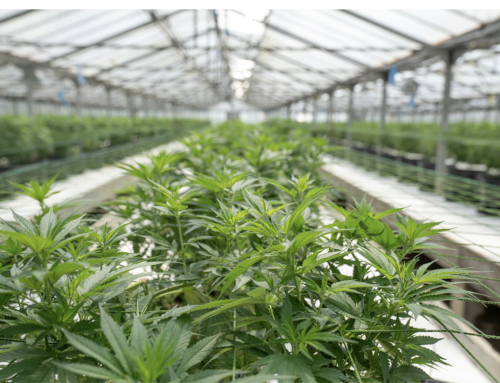
Operationally, the company received a $4.5 million initial tranche of up to $8 million in financing led by Mindset Capital, which is being deployed to expand Salisbury Canyon Ranch toward its full 180-acre permitted capacity. The remaining financing was expected to close by May 8. Additionally, the company closed its acquisition of Himalaya, a California concentrates brand, adding a branded retail channel alongside its existing wholesale business.
Looking ahead, LEEF expects its first 2026 harvest in June and anticipates meaningful production volumes entering the pipeline in early Q3, with additional acreage coming online through the rest of the year.
For a company operating in what the CFO himself called “the most challenging wholesale concentrate market in the country,” LEEF’s Q1 results carry a specific kind of weight. The numbers do not suggest a company thriving on favorable market conditions. They suggest a cost structure that is now generating real returns in spite of them.
About the Author: HCN News Team

Related Posts