Hemp THC Ban Moves Closer as Congressional Fixes Collapse







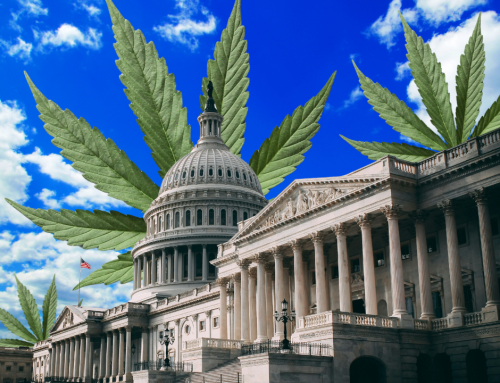
WASHINGTON – The federal clock on hemp-derived THC products is ticking with no sign of relief from Capitol Hill. Amendments filed last week to delay, or in one case accelerate, the November 12 ban on most intoxicating hemp products have collapsed in the House Rules Committee, leaving a $28 billion industry without a legislative lifeline and farmers in the middle of spring planting season without answers.
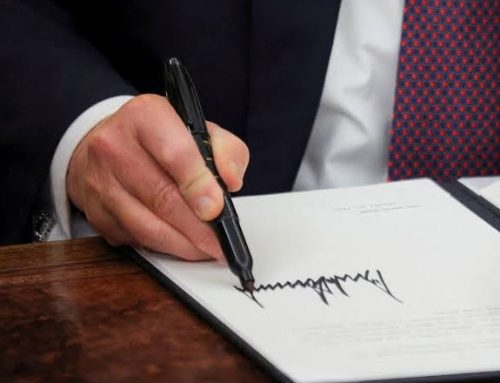
Rep. James Comer (R), Chairman of the House Oversight and Government Reform Committee, had filed an amendment to the 2026 Farm Bill that would have pushed the ban’s effective date to November 2027. On the same day, April 23, President Trump posted on Truth Social calling on Congress to protect full-spectrum CBD products, lending the effort a degree of executive visibility. It wasn’t enough. Comer withdrew his amendment before the Rules Committee could act on it.
Rep. Andy Barr (R) submitted a separate proposal to preserve the existing hemp market under a new regulatory framework, then pulled it the same day for reasons that remain unexplained. On the other side of the debate, Rep. Mary Miller (R) had introduced an amendment to accelerate the ban, which the Rules Committee did not make in order for a floor vote.
What’s the upshot?
No amendment, neither one slowing the ban nor one speeding it up, will reach the House floor through the Farm Bill.
Three Procedural Doors, All Shut
The hemp industry’s attempt to reverse or delay the Hemp Ban has been methodical, and it has failed at every turn.
The first effort was the Hemp Planting Predictability Act (H.R. 7024), introduced in January by Rep. Jim Baird (R), with Senate companions filed by Sens. Amy Klobuchar (D), Rand Paul (R), and Jeff Merkley (D). The bill would push the ban’s effective date to November 2028, providing a two-year runway for Congress to develop a permanent regulatory structure. It attracted 15 House co-sponsors, a bipartisan press conference, and a public endorsement from Rep. Comer. It has not received a committee hearing, a markup session, or a floor vote in either chamber.
The second attempt came during the House Agriculture Committee’s markup of the 2026 Farm Bill. Baird filed two amendments – one for a one-year delay, one for two years. Committee Chairman Glenn Thompson (R) ruled both non-germane before the markup began, arguing that regulating finished hemp consumer products falls under the House Energy and Commerce Committee and the FDA, not Agriculture. Ranking Member Angie Craig (D), who called the original ban “just plain wrong,” presented the two-year delay on Baird’s behalf and then withdrew it without forcing a vote. The committee passed the Farm Bill 34-17 on March 5 with no hemp consumer product relief attached.
The third door was the Rules Committee process for the Farm Bill. With 305 amendments submitted by the April 22 deadline, plus 48 filed late, hemp amendments from Comer and Barr were among them. Both were gone before the week of April 27 consideration even began.
The House Energy and Commerce Committee, which Thompson repeatedly cited as the appropriate venue for consumer hemp product regulation, has not taken up the issue.
A Jurisdictional Standoff with a Hard Deadline
What has emerged is a procedural impasse with real-world consequences. The Agriculture Committee says finished hemp products are the FDA’s jurisdiction. Energy and Commerce hasn’t moved. And the FDA, which was required by the November 2025 law to publish clarifying lists of cannabinoids within 90 days of enactment [by February 10, 2026] missed that deadline. Without that guidance, manufacturers cannot determine which compounds count toward the 0.4 mg per-container cap, making it impossible to design compliant products.
Jonathan Miller, general counsel of the U.S. Hemp Roundtable, has stated publicly that there is insufficient time before November for the FDA to build a workable regulatory replacement from scratch. The practical effect of regulatory ambiguity is already spreading: supply chain agreements are being renegotiated, product development pipelines have stalled, insurance underwriters are pulling back from hemp-related operations, and capital for new ventures in the category has dried up.
States are not waiting for federal clarity. Texas banned THCA flower as of March 31. Ohio’s Senate Bill 56 took effect March 20, eliminating all intoxicating hemp products statewide. Pennsylvania and Rhode Island are advancing bills aligned with the forthcoming federal restrictions. Minnesota, whose licensed hemp regulatory model includes age-gating, testing, and per-serving THC limits, has been cited by federal legislators as a working example of what a regulatory alternative could look like, but… Building that framework nationally takes time Congress appears unwilling to grant.
The Remaining Options
With the Farm Bill’s Rules Committee process effectively closing the door on hemp amendments, the remaining legislative paths are narrow. The Hemp Planting Predictability Act remains technically viable. It could receive a committee hearing, pass through markup, clear both chambers, and reach the president’s desk. That sequence has not begun. Delay language could also be attached to a future must-pass spending measure, but that requires both a willing legislative vehicle and sponsors capable of keeping the provision in the final text – the same combination that failed to strip Section 781 from last November’s spending bill.
Sens. Rand Paul (R), Amy Klobuchar (D), and Joni Ernst (R) have also filed the Hemp Safety Enforcement Act, which would effectively allow states to opt out of the federal recriminalization of hemp THC products – a federalist approach that could provide relief in some markets while leaving the underlying ban intact. Its prospects remain unclear.
The industry’s other avenue is litigation. Lawsuits are already active in Ohio. National challenges arguing preemption conflicts between the new federal definition and existing state hemp frameworks are anticipated. The 0.4 mg per-container threshold implicates not only intoxicating products but also a range of CBD wellness products marketed to seniors, veterans, and chronic-care consumers, a fact that broadens the pool of potential plaintiffs and the political pressure on Congress to act.
In Conclusion
What is unfolding in Washington is less a debate over Cannabis policy than a structural failure of legislative process. A provision that rewrites an entire industry’s legal foundation was passed inside a shutdown-ending spending bill, without committee hearings, without industry input, and without the regulatory infrastructure needed to implement it. The agencies tasked with filling in the technical details are behind schedule. The committees with jurisdiction over those agencies have not acted. And the lawmakers who want to fix the law cannot find a vehicle that will carry the fix to the floor.
The November 12 deadline is a real date, not a negotiating position. Farmers making planting decisions this spring, manufacturers reformulating products, and retailers managing inventory cannot wait for Congress to resolve a jurisdictional dispute between two committees.
The window for a legislative correction is not closing.
It has largely closed.
What comes next for the hemp-derived cannabinoid market [valued at approximately $28.4 billion, supporting an estimated 300,000 jobs, and generating roughly $1.5 billion in state tax revenue] will be determined less by Congress than by how aggressively federal prosecutors choose to enforce the new law, how quickly litigation produces injunctions, and which states build regulatory frameworks capable of absorbing the industry on their own terms.
About the Author: HCN News Team

Related Posts