
President Trump Signs EO to Accelerate Psychedelic Research and Access
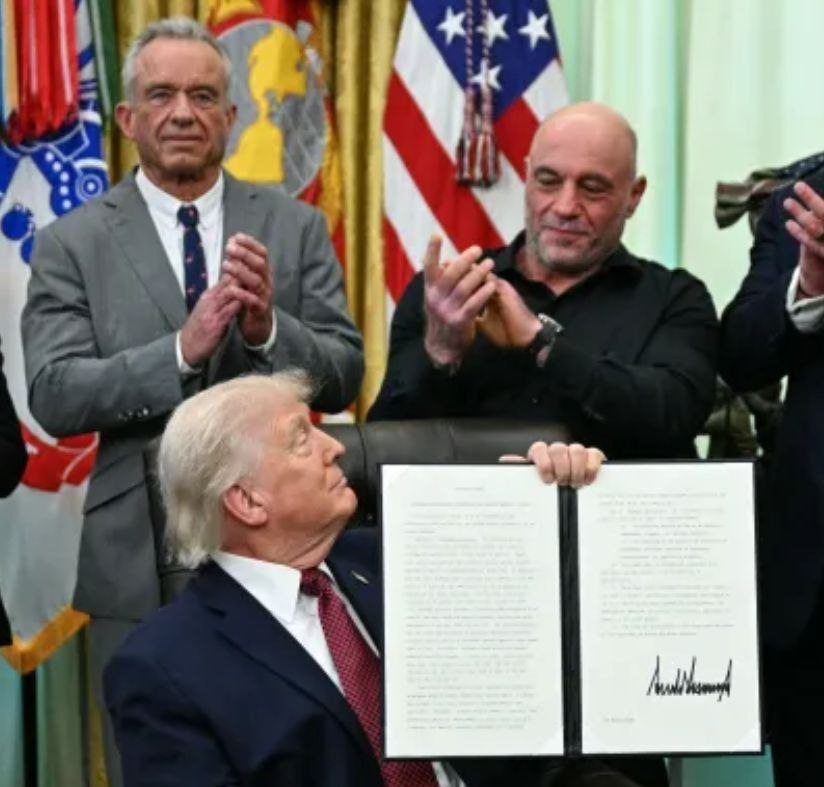






WASHINGTON – President Donald Trump signed an executive order directing federal agencies to speed up reviews of certain psychedelic compounds and open new pathways for patient access as treatments for serious mental health disorders like severe depression, PTSD, and addictions that resist standard therapies.
The order, formally titled “Accelerating Medical Treatments for Serious Mental Illness,” instructs the Food and Drug Administration (FDA) to issue Commissioner’s National Priority Vouchers for psychedelic drugs that already hold Breakthrough Therapy designations. It also calls on the FDA and Drug Enforcement Administration (DEA) to create a process allowing eligible patients to obtain investigational psychedelics [with ibogaine compounds highlighted] under the Right to Try Act once basic safety standards are cleared.
In a parallel step, the Department of Health and Human Services must direct at least $50 million through the Advanced Research Projects Agency for Health to back state-level programs already exploring these substances. The directive further requires closer coordination among HHS, the FDA, the Department of Veterans Affairs and private researchers to expand clinical trial enrollment and improve data sharing.
Officials described the action as a practical response to ongoing shortfalls in mental health care. Federal data show more than 14 million adults contend with serious mental illness, while suicide rates among veterans run more than twice the national average. Early clinical work at places such as Johns Hopkins, Stanford and Harvard has pointed to possible benefits for treatment-resistant cases, even as the compounds stay classified as Schedule I substances at the federal level.
Trump, who signed the document in the Oval Office, said the measure would give patients facing the most debilitating symptoms a fresh option to regain stability. The step extends the Right to Try framework he advanced in his first term, which lets patients with life-threatening conditions try investigational drugs outside normal approval channels.
Several states have already moved on their own. Texas, for one, established a research consortium centered on ibogaine last year, and the new federal dollars are structured to align with similar initiatives where they exist. Coverage noted that the order stops short of reclassifying the drugs or changing their controlled-substance status outright; instead, it focuses on cutting red tape around research and limited therapeutic access.
Reports indicated the push gained momentum after conversations involving podcast host Joe Rogan, who has spotlighted veteran experiences with ibogaine and other compounds. Veterans’ groups have pressed for faster study of these options, citing potential relief from PTSD and related conditions.
About the Author: HCN News Team

Related Posts