Georgia Expands Medical Cannabis Program with SB 220: What It Means for Patients and Operators






ATLANTA- The state of Georgia is on the verge of a meaningful shift in its medical Cannabis program.
Legislation passed by the Georgia General Assembly—Senate Bill 220—would significantly expand the types of Cannabis products available to patients, moving the state beyond its historically restrictive, low-THC framework.
From Limited THC to Full Medical Program
For years, Georgia’s program has been defined by tight constraints, particularly a 5% THC cap and a focus on oil-based products. SB 220 changes that.
The bill:
- Removes the 5% THC limit
- Allows Cannabis flower (leaf) for vaporization
- Permits Cannabis vape products
- Expands qualifying conditions, including lupus
According to industry operators, this marks a structural transition rather than a marginal tweak.
Gary Long, CEO of Botanical Sciences, framed it as a move toward alignment with the broader U.S. market:
“It moves our program from a low oil-based THC program to a medical cannabis program.”
(Image: Georgia State Capital)

Why Inhalable Products Matter
One of the most important changes is the introduction of inhalable Cannabis formats—specifically vapes and vaporized flower.
From a clinical and patient-experience standpoint, this is not trivial.
- Faster onset of effects compared to edibles or tinctures
- Greater dose control for patients managing symptoms in real time
- Improved efficacy for conditions requiring immediate relief
Operators report that patient demand has consistently leaned toward formats that deliver rapid results—something Georgia’s prior framework struggled to accommodate.
Patient Impact: Quality of Life and Functionality
For patients, the expansion is less about product variety and more about day-to-day functionality.
Conditions covered under Georgia’s program already include:
- Multiple sclerosis
- Parkinson’s disease
- PTSD
- Seizure disorders
- Chronic pain
With lupus now added, the addressable patient base broadens further.
Patients like Danielle Rasor, a business owner managing multiple sclerosis, point to tangible benefits:
- Increased energy
- Ability to maintain professional responsibilities
- Improved family life and caregiving capacity
This reflects a broader trend across regulated markets: medical Cannabis adoption tends to skew toward patients seeking stability and functionality—not recreational use.
Addressing the Pushback
As with most policy expansions, opposition has centered on concerns around misuse and Cannabis use disorder.
Industry participants are pushing back on that narrative.
Operators emphasize:
- Physician authorization remains required
- The program remains strictly medical
- The core patient demographic is older and condition-driven
Notably, Long highlighted that the average patient is a middle-aged woman managing multiple chronic conditions—a profile that diverges sharply from common stereotypes.
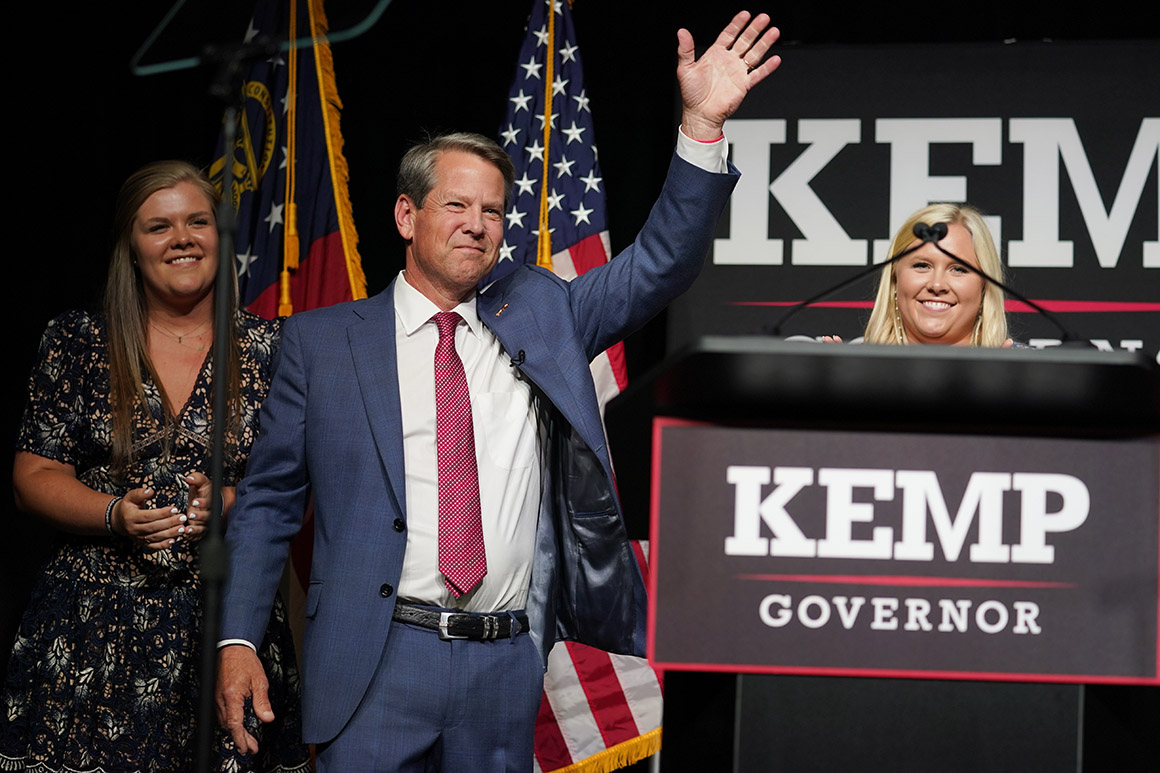
(Image: Republican Gov. Brian Kemp waves to supporters)
From an HCN perspective, SB 220 is less about Georgia catching up—and more about unlocking a constrained market.
Key implications:
- Revenue expansion: Broader product categories typically drive higher basket sizes
- Patient acquisition: Expanded qualifying conditions increase total addressable market
- Operational leverage: Existing operators like Botanical Sciences can scale within a more flexible regulatory framework
- Competitive positioning: Georgia becomes more viable for future investment and partnerships
The shift also reinforces a broader national pattern: states that began with highly restrictive programs are gradually evolving toward more functional, patient-centered systems.
What Happens Next
The bill now awaits signature from Brian Kemp.
If signed, Georgia will move from one of the more limited medical Cannabis programs in the U.S. to a structure that more closely resembles established markets—while still maintaining a strictly medical orientation.
For operators, investors, and policymakers, SB 220 is another signal that incremental reform continues to reshape the Cannabis landscape—state by state, constraint by constraint.
About the Author: HCN News Team

Related Posts