Glass House Brands Reports Q4 and FY 2025 Financial Results






LONG BEACH – In a sector still adjusting to ongoing wholesale pricing pressures in California, Glass House Brands Inc. has released its fourth-quarter and full-year 2025 earnings, showcasing the effects of deliberate operational decisions and emphasizing consistent performance in its retail segment, alongside a robust recovery strategy.
The company posted fourth-quarter revenue of $38.9 million for the period ended December 31, 2025, in line with the guidance it had issued and compared with $53 million in the same period a year earlier. The vertically integrated Cannabis operator also reported full-year revenue of $182 million, down from $200.9 million in 2024. Gross margin for the year came in at 42%, versus 48% the prior year, while adjusted EBITDA totaled $17 million, or about 9% of sales. That compared with $40.3 million in adjusted EBITDA in 2024.
The softer results stemmed largely from a deliberate reduction in wholesale biomass output during H2 2025. The company had scaled back new plantings after encountering staffing shortages and other operational disruptions. Fourth-quarter wholesale biomass revenue fell to $22.6 million from higher levels a year ago, with the average selling price dropping to $146 per pound from $220. Production costs rose to $129 per pound from $110. Equivalent dry-pound output for the quarter reached 159,131 pounds, slightly below the prior year but ahead of internal targets.
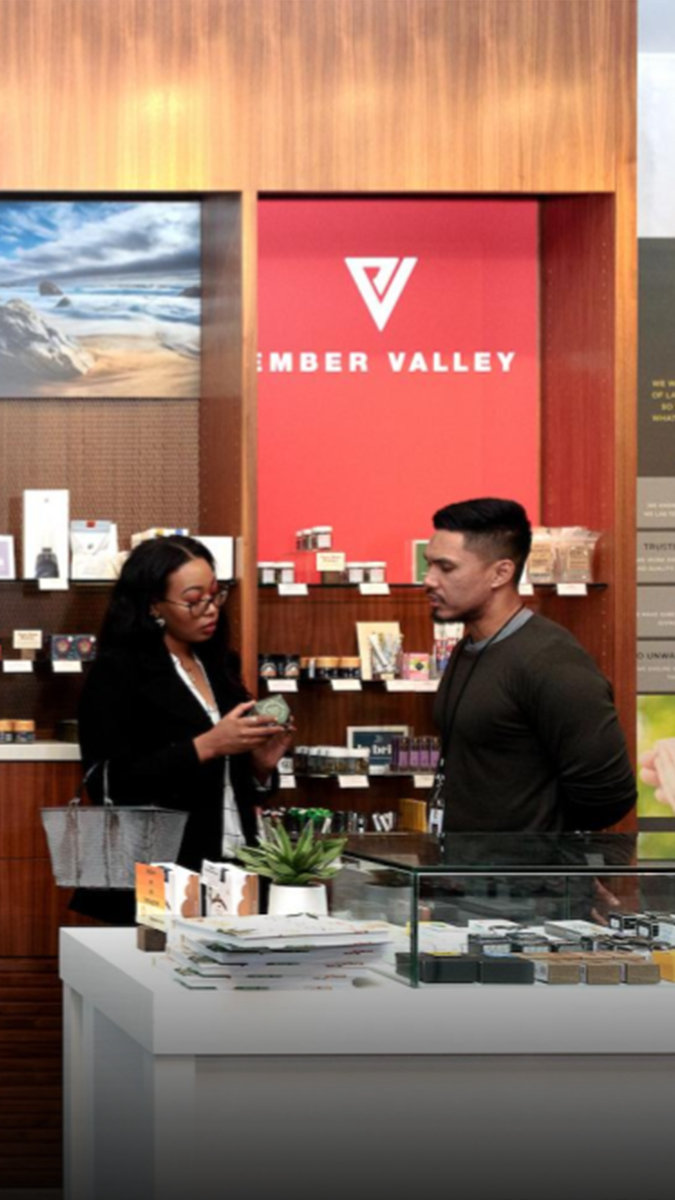
Retail operations provided a steadier contribution. Store sales generated $11.9 million in Q4, up 1% from a year earlier and reflecting a 10% increase for the full year to $48.2 million. The company’s stores continued to outperform the broader California market, helped by competitive pricing on its Allswell-branded flower.
At year-end the company held $23.4 million in cash and restricted cash, down from $36.9 million at the close of 2024 but still sufficient to support ongoing operations. Operating cash flow for the full year was $11.4 million.
In a conference call with investors Tuesday evening, executives described 2025 as a year of short-term adjustments that strengthened the company’s long-term position. Co-founder and CEO Kyle Kazan noted that the first half delivered strong execution on volume, costs and cash generation, while the second half required measured responses to external pressures. By December 31 the legacy greenhouses were fully planted, and overall cultivated acreage stood at the highest level in company history.
Looking ahead, Glass House Brands laid out plans for a sharp rebound. It forecasts 2026 revenue between $235 million and $245 million, before any potential interstate Cannabis sales or new hemp revenue streams. Wholesale biomass production is expected to reach roughly 1 million pounds, a 50% increase from 2025 levels. Production costs are targeted near $100 per pound, and gross margin is projected to recover to about 48%. Adjusted EBITDA is seen in the high-$40 million range, with cash and restricted cash exceeding $50 million by year-end after roughly $20 million in capital spending to complete greenhouse retrofits.
The company has also begun exploring hemp cultivation in one of its facilities and continues to work with regulators on possible expansion beyond California borders.
The FY 2025 numbers reflect the persistent pricing pressure that has weighed on California’s wholesale market for much of the past two years. Yet, Glass House Brands’ ability to maintain retail momentum, preserve a solid cash cushion and return to full cultivation capacity by year-end suggests a measured approach that prioritizes sustainable scale over temporary volume. If the company executes on its 2026 targets – higher output, lower unit costs, and improved product mix – the financial trajectory could shift meaningfully higher, providing a clearer picture of how vertical integration and disciplined capital allocation perform once market conditions stabilize.
About the Author: HCN News Team

Related Posts