SAM in Action: How Dark Money Fuels Prohibitionists Attacks







LOS ANGELES – A noticeable uptick in anti-Cannabis content has appeared on social platforms lately, flooding threads with posts on scromiting, schizophrenia, psychosis risks, outdated research, recycled study headlines, and new ballot proposals surfacing in states with established legal markets. Observers might wonder if this reflects spontaneous public concern or something more structured. Let’s take a closer look at the funding behind these issues.
Financial Surge Spurs Targeted Action
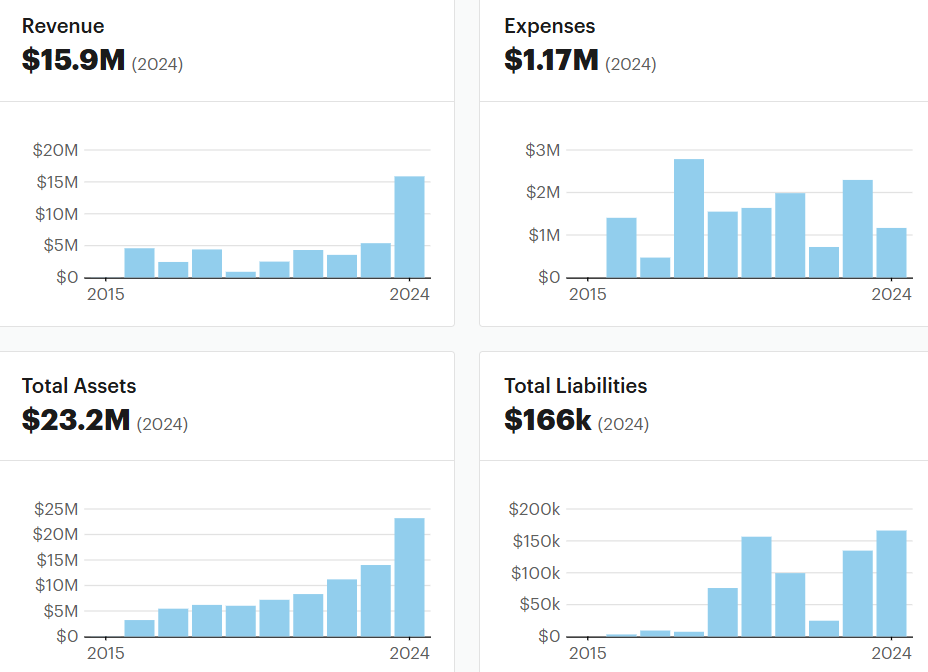
SAM Action Inc., the advocacy affiliate of Smart Approaches to Marijuana, filed its 2024 Form 990 showing $15.9 million in total revenue [a nearly threefold jump from about $5.4 million in 2023] and $23.2 million in total assets, with net assets at $23 million after modest expenses of around $1.2 million and net income of $14.7 million, according to records on ProPublica’s Nonprofit Explorer.
This is no small grassroots effort.
It signals a well-resourced operation.
The revenue breakdown reveals more than straightforward donations. Contributions totaled $8.6 million (about 54.2% of revenue), investment income accounted for about $800 thousand (5.0%), and realized gains from sales of assets generated $6.5 million (40.7%). The group appears to have liquidated roughly $29.5 million in assets to realize those gains, creating substantial liquidity for operations and campaigns. This sharp revenue growth in one year [far beyond incremental change] typically signals intentional buildup for expanded activity rather than organic drift. With $23 million in assets, the organization possesses considerable capacity to select targets, fund signature drives, hire consultants, produce media, and run digital operations. When organizations triple their intake like this, they typically gear up for major pushes. In this particular case, ballot initiatives.
Massachusetts Initiative
The Old Bay State has become the primary focus of this capacity. SAM Action contributed the full $1.55 million raised by the Coalition for a Healthy Massachusetts through Q4 2025, covering the costs of gathering and certifying 78,301 valid signatures for a proposal called “An Act to Restore a Sensible Marijuana Policy.” If enacted, the measure would dismantle the state’s approximately $1.6 billion adult-use market by:
- prohibiting dispensary sales, cultivation, and manufacturing for recreational purposes,
- recriminalize home growing (currently allowed up to six plants per adult 21-plus), and
- repeal associated taxes, retaining medical Cannabis access and decriminalized personal possession.
After certification by the Secretary of the Commonwealth’s office, a challenge alleging deceptive signature-gathering tactics reached the State Ballot Law Commission. In late January 2026, the commission dismissed the objection in a detailed ruling, finding no admissible evidence of fraud and allowing the petition to proceed. The proposal now awaits action by the Massachusetts Legislature, which has until May 5, 2026, to enact it. Should lawmakers decline, supporters must collect and certify at least 12,429 additional valid signatures by July 1, 2026, to qualify for the November 2026 ballot. This positions Massachusetts as a high-stakes test of rollback viability against an established, revenue-generating industry.

Maine Effort Faces Setback
A comparable initiative in Maine received $2 million from SAM Action in December 2025 to support Mainers for a Safe and Healthy Future. The proposal sought to prohibit licensed adult-use cultivation, manufacturing, and sales beginning in 2028 while preserving limited personal possession. Despite the funding, the campaign did not submit any signatures by the February 2, 2026, deadline for the 2026 ballot. No petitions were filed, according to the Maine Secretary of State’s office, shifting any potential statewide vote to November 2027 or later – provided new signatures meet requirements by mid-2027. The delay illustrates those financial resources, while enabling ambition, do not guarantee success against procedural timelines and operational demands.

Messaging & Strategy Patterns
When large sums move into advocacy, coordinated and amplified messaging often follows. Recent months have seen coordinated emphasis on public health angles along with selective highlighting of studies and narrative timing aligned with ballot deadlines. While some discussions arise naturally, the $23 million balance sheet equips structured approach to boost visibility, test risk-focused framing in receptive areas, and target states with lower expected turnout or narrow polling margins. This aligns with established campaign logic: resources allow precise selection of battlegrounds and sustained pressure where perceptions can sway outcomes.
Capacity enables messaging.
Messaging influences perception.
Perception can drive ballots.

Transparency Considerations
SAM Action Inc. operates as a 501(c)(4) entity, meaning contributions are not tax-deductible and donor identities remain generally undisclosed in public filings – no Schedule B details appear on the Form 990. The document shows the $8.6 million in contributions but offers no view into specific sources. This arrangement complies with federal law, yet it prompts legitimate discussion about accountability when an organization generating nearly $16 million annually helps drive state laws, national conversations, and broader discourse on Cannabis policy.
Balancing Risks & Policy
Cannabis use involves risks [no substance is entirely harmless] and issues like youth access, potential mental health effects from heavy consumption, and market regulation warrant serious consideration. Sound policy decisions, however, depend on comprehensive, balanced evidence rather than narrowly amplified concerns funded through private channels.
Scientific debates call for full data.
Political campaigns benefit from clear money trails.

Path Ahead
Now, patterns like sudden messaging waves, strategic ballot pushes in carefully chosen states, and synchronized narratives carry added context from these disclosures:
- $15.9 million in revenue,
- $23.2 million in assets, and
- a sharp threefold annual jump.
This points to deliberate infrastructure supporting advocacy, not solely spontaneous momentum. Massachusetts offers the clearest near-term challenge, with potential implications for industry stability and voter attitudes nationwide if successful, or… affirmation of regulated markets’ durability if rejected.
The Maine outcome reminds that money faces practical limits. As federal conversations on scheduling and enforcement continue alongside diverse state approaches, these initiatives demonstrate how advocacy financing can prolong challenges to long-standing policies. Should the Massachusetts question reach voters in November 2026, the result will provide a direct reading on whether health-focused arguments resonate enough to prompt change or if acceptance of legal, regulated Cannabis remains the prevailing view.
About the Author: HCN News Team

Related Posts