
Cannabis Cultivation Market Forecast to Reach $465B by 2030







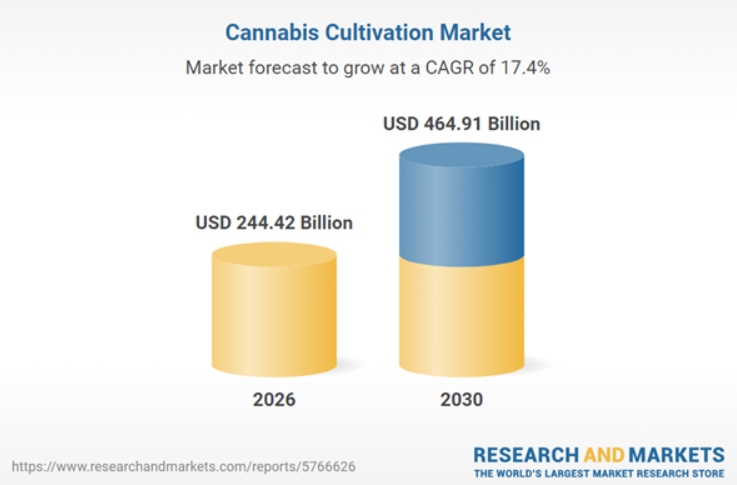
LOS ANGELES – A recent report from Research and Markets projects the global Cannabis cultivation market to reach $464.91 billion by 2030, up from $207.46 billion in 2025, reflecting a compound annual growth rate (CAGR) of 17.4% from 2026 onward. The analysis attributes this trajectory to sustained legalization efforts across jurisdictions, growing consumer preference for high-quality products, and investments in automated systems that improve yield and consistency.
The report highlights automation and indoor cultivation as central factors. Controlled environments allow producers to maintain precise conditions for temperature, humidity, and lighting, supporting year-round production and reducing risks from weather or pests. Global legalization further supports this trend, with more countries and states permitting medical and adult-use Cannabis, thereby increasing demand for premium Cannabis products with consistent quality, predictable cannabinoid profiles, and higher potency.
Producers are directing capital toward automated equipment and systems that streamline planting, monitoring, and harvesting processes. Indoor and controlled-environment methods are expanding, particularly in areas where outdoor growing faces climatic or regulatory limits. These approaches help maintain steady supply and support specialized strains suited for medical or wellness uses. Advances in post-harvest handling, including improved drying and processing techniques, further contribute to product quality.
Indoor and greenhouse cultivation, in particular, have become dominant in many mature markets. Fully enclosed facilities equipped with LED lighting, hydroponic or aeroponic systems, and advanced HVAC allow growers to produce Cannabis regardless of external weather patterns or seasonal limitations. In regions with short growing seasons, high land costs, or stringent zoning rules, indoor methods often represent the only viable path to commercial-scale output. The same controlled conditions support the consistent reproduction of specialized genetics developed for specific therapeutic effects or flavor profiles, further strengthening market differentiation.
The figures presented in the report reflect a sector transitioning from an early stage of expansion to a more advanced level of commercial Cannabis production. Continued policy liberalization, combined with technological gains that lower unit costs and raise quality, creates a strong foundation for the projected growth. At the same time, the pace of that expansion will depend on how successfully cultivators balance rising output with disciplined cost management, energy efficiency, and adherence to an ever-changing patchwork of regulations. The next half-decade will likely determine which operators emerge as long-term leaders in an industry that is no longer experimental but increasingly industrial in scope.
About the Author: HCN News Team

Related Posts