Americans Are Open to Learn More About Psychedelics, Ipsos Poll Finds







WASHINGTON – A fresh survey reveals that a majority of Americans express interest in gaining more knowledge about psychedelics as potential tools for mental healthcare, even as public familiarity remains spotty and opinions split along demographic lines. The poll, conducted last Fall by Ipsos in partnership with Psychedelic Alpha, underscores readiness among respondents to engage with the topic.
At its core, the study, based on responses from 1,022 U.S. adults surveyed online, probes how information flows to the public and shapes views on psychedelic compounds. Awareness is low. Seven in 10 Americans report encountering no news coverage on the subject in the prior three months. When exposure does occur, it often skews negative, particularly on social media, where younger adults pull most of their intel. Conversations with friends rank as another key conduit, especially for those under 35, while television news dominates for people over 50.
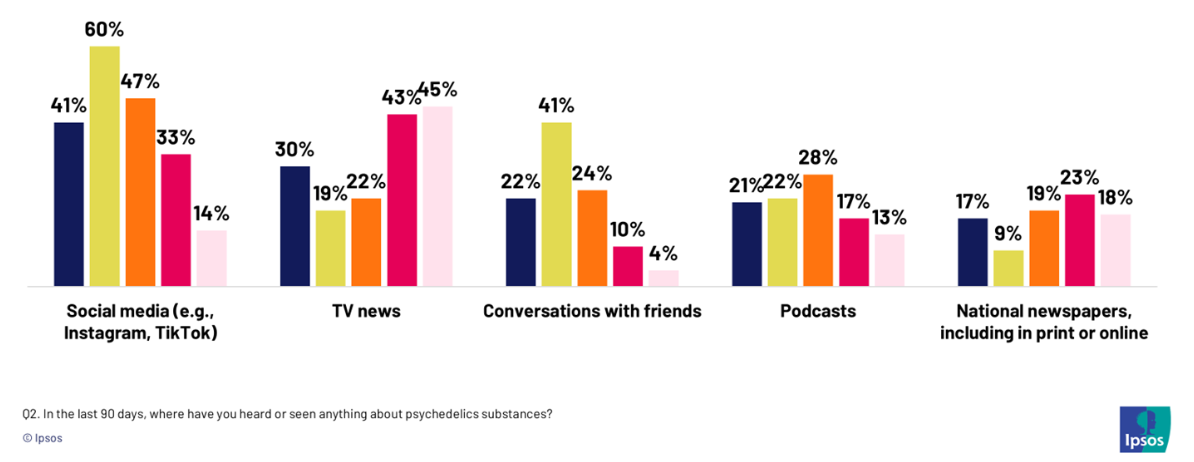
This patchwork of sources feeds a balanced but uneven sentiment. The poll tallies 28% holding favorable opinions on psychedelics for mental health treatment, matched by the same share voicing opposition, and 44% landing in the middle – neither strongly for nor against. Views have held steady for most with regard to June 2025 poll, but a telling asymmetry appears in shifts: 21% report growing more positive, compared to just 10% tilting negative. That net gain of 11% points suggests a subtle momentum, one that researchers attribute to incremental media coverage and early clinical trial results showing promise for conditions like PTSD, depression, and anxiety.
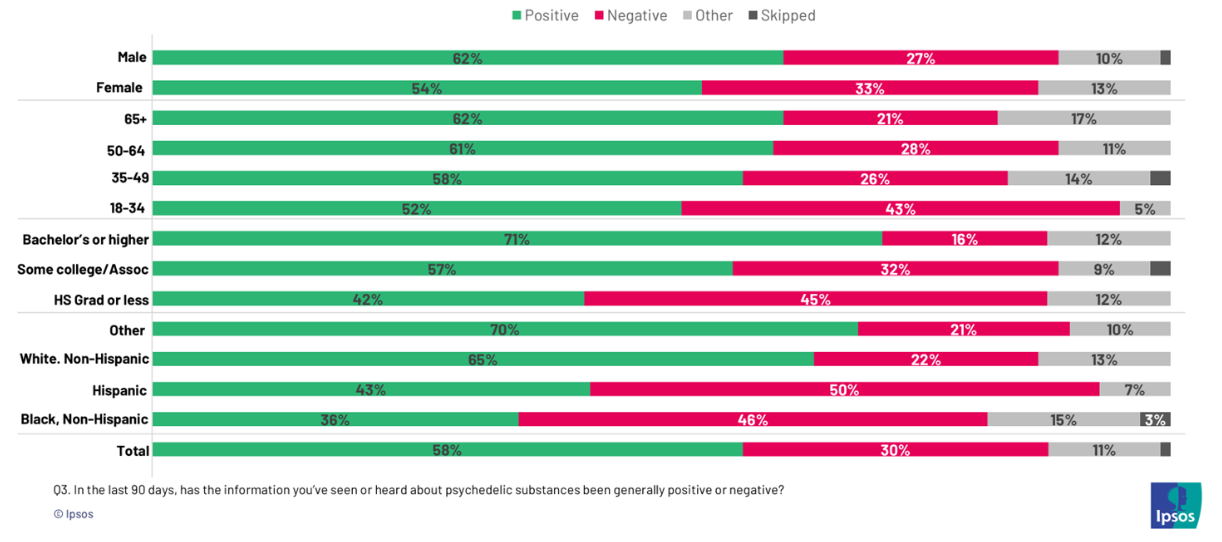
Demographic fault lines add nuance. Men, younger respondents, and college graduates report higher comfort levels with the idea of psychedelic therapy, often citing trust in supervised medical environments. In contrast, older adults lean wary, with their skepticism rooted less in direct experience than in sporadic, alarmist portrayals on traditional outlets.
Racial differences stand out too. Black respondents, who face higher rates of negative messaging online, express more reservations than white counterparts. Hispanic participants fall somewhere in between, with education level proving a stronger predictor of openness across groups – those with advanced degrees show twice the comfort in clinical settings as high school graduates.
Concerns, when voiced, cluster around psychological risks. About one-quarter of respondents flagged fears of a distressing experience, echoing “bad trip” stories that circulate widely but rarely reflect controlled therapeutic protocols. Physical side effects worry fewer, and a notable one in six sees no red flags at all. Only 3% draw a hard line, ruling out psychedelics entirely no matter the context.
These patterns point to clear gaps in public understanding, but also to straightforward fixes. The Ipsos team notes that targeted outreach [think doctor-patient talks or vetted online primers] could bridge divides, particularly for underserved communities where misinformation hits hardest.
Education is grounded in solid facts and frames conversations to match where people get their cues. Social media spotlighting psychedelics can play a dual role as both an amplifier of doubt and vector for credible updates.
For the psychedelics sector, still navigating mixed signals from authorities, the poll reveals opportunities without overpromising. With federal approvals lagging and state-level experiments gaining steam, industry players must prioritize transparent communication to convert curiosity into confidence among informed and cautious Americans willing to listen and learn.
Image: ipsos.com
About the Author: HCN News Team

Related Posts