Who Will Decide Cannabis Legalization? The Math Will.







LOS ANGELES -For decades, Cannabis reform in the United States has moved unevenly—state by state, ballot by ballot, crisis by crisis. On paper, federal prohibition still stands, and national politics remain polarized. But economically and politically, the ground beneath the country is shifting. Those shifts are quietly aligning in favor of nationwide recreational Cannabis legalization far sooner than conventional wisdom suggests.
The U.S. remains politically divided, and recent elections reinforced that split rather than resolving it. Yet beneath the surface, warning lights are flashing—especially around economic stress, voter anxiety, and the growing gap between ideological positioning and practical governance.
Those dynamics matter enormously for Cannabis.
Economic Pressure Is Rewriting Political Priorities
As the country moves through late 2025 and into 2026, economic anxiety is no longer abstract. Polling consistently shows large portions of the electorate dissatisfied with economic conditions, affordability, and job security. This unease cuts across party lines and demographics.
Tariff-driven cost pressures that were delayed earlier are now filtering through supply chains. Corporate bankruptcies and layoffs have accelerated. Household debt has reached historic highs, with delinquency rates climbing. Healthcare costs continue to rise while state and local governments struggle with constrained tax bases.
At the same time, traditional revenue engines are weakening. Energy markets are volatile. Commercial real estate is under strain. Consumer spending is softening. Governments at every level are confronting the same problem: rising costs with fewer politically acceptable ways to raise revenue.
This is where Cannabis enters the picture—not as a cultural debate, but as an economic one.
Cannabis as a Revenue and Jobs Policy, Not a Social Statement
Legal Cannabis represents something governments are running short on: a flexible, scalable economic lever.
Recreational Cannabis offers new tax revenue without raising income, property, or sales taxes; job creation across cultivation, retail, logistics, compliance, and testing; domestic economic activity that cannot be offshored; and consumer-driven demand that has proven resilient in downturns.
Crucially, Cannabis revenue is not tied to interest rates, global trade flows, or capital markets. It is local, recurring, and measurable.
For governments facing budget pressure while politically boxed in on taxes and spending cuts, that combination is hard to ignore.
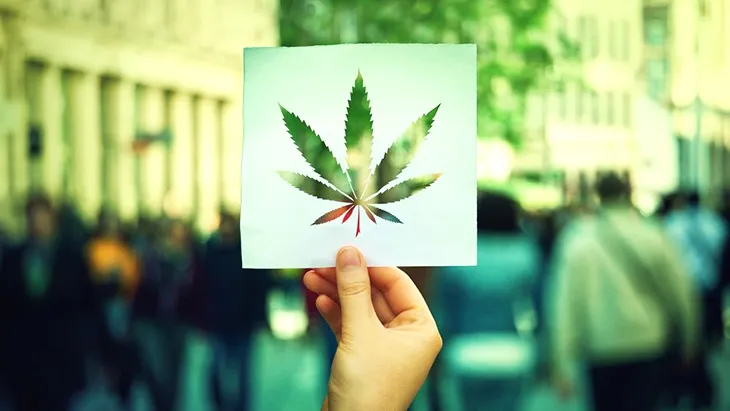
Public support for legal Cannabis is now durable and bipartisan. Majorities of Democrats, Republicans, and independents support adult-use legalization when framed around regulation, safety, and economic benefit.
Support is strongest when Cannabis is discussed in terms of economic opportunity, criminal justice fairness, medical access and regulation, and state and local control.
This is no longer a fringe position. It is a mainstream expectation—particularly among younger voters and working families experiencing economic strain.
The political risk has shifted. Opposing Cannabis outright increasingly carries more downside than upside.
Federal Momentum Makes Inaction Costlier
Federal rescheduling and incremental reform have begun to remove institutional barriers that once justified delay. Capital markets are slowly reopening. Banking access is improving. Regulatory clarity is increasing.
States and regions that remain on the sidelines are now watching investment, talent, and tax base migrate elsewhere.
At the national level, prohibition is becoming less a moral stance and more a competitive disadvantage.
The Direction Is Clear, Even If the Timeline Is Uneven
The United States is unlikely to flip a switch overnight and legalize Cannabis everywhere at once. Change will continue to be incremental, uneven, and politically cautious.
But the underlying math is changing. Economic dissatisfaction is rising. Budget deficits are widening. Healthcare costs are accelerating. Traditional tax increases are underperforming. Cannabis offers revenue without new tax burdens.
Taken together, these forces point in one direction.
National Cannabis legalization is no longer a question of if. It is becoming a question of how long policymakers can afford to wait before economic reality forces their hand.
The Final Variable: Math
In the end, Cannabis legalization in the United States won’t be decided by activists, trade groups, or political personalities.
It will be decided by math.
Math doesn’t argue. Math doesn’t negotiate. Math doesn’t care whether the vote comes from Democrats or Republicans.
Math shows up when budgets stop working—when deficits widen, healthcare costs rise, and tax hikes underperform.
At scale, Cannabis stops being a cultural issue and becomes a fiscal one. Conservative estimates already place the global Cannabis market north of $100 billion, with larger projections as legalization and regulation expand.
Markets of that size don’t stay informal. They don’t stay untaxed. And they don’t stay politically ignored.
The United States may delay. It may posture. It may argue.
But eventually, the numbers leave no alternative.
Highly Capitalized Network © Copyright 2026. All Rights Reserved. Author Mark Collins is the founder of Highly Capitalized Network (HCN), an independent business and financial news platform covering Cannabis, hemp, psychedelics, and wellness. He holds an MBA and a CFA designation and focuses on the economic and policy forces shaping Cannabis legalization, capital formation, and market structure.
About the Author: HCN News Team

Related Posts